
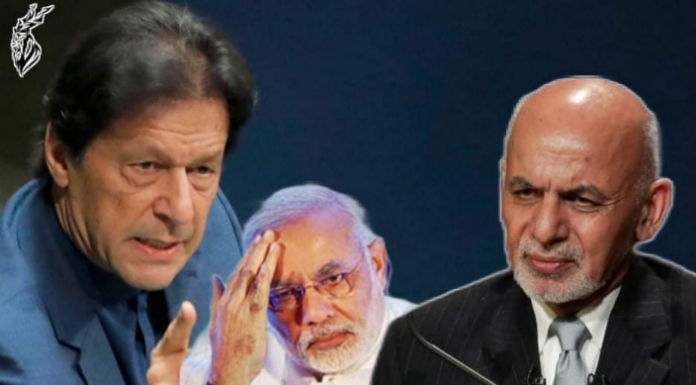

Since the withdrawal of US troops began, Afghan Taliban are gaining more power along with territories. Kabul regime alleged Pakistan’s involvement in Afghan Taliban gaining victories in Afghanistan. Vice President of Afghanistan Amrullah Saleh accused Pakistan Air Force of providing air support to the Afghan Taliban, making it impossible for the Afghan National Army to recapture the lost areas bordering Pakistan’s Chaman.
In a statement delivered on Friday at the “Central and South Asia Regional Connectivity: Challenges and Opportunities” conference in Uzbekistan, Prime Minister Imran Khan rejected Afghan President Ashraf Ghani’s criticism that Pakistan has played a “negative role” in Afghanistan’s peace talks.
Khan, who was in Uzbekistan for a two‑day visit, said it was “unfair” to blame Pakistan for the turmoil in its neighbor, noting that the country has endured 70,000 casualties over the past 15 years.
Imran Khan reminded the audience that Pakistan’s economy is only now emerging from a difficult period and that the last thing the nation wants is further conflict in Afghanistan.
He argued that the Taliban’s willingness to negotiate waned after the United States set a withdrawal timeline, questioning why the insurgents would compromise when they sense victory.
“When there were 150,000 NATO troops… that was the time to ask the Taliban to come to the table,” he said.
The prime minister emphasized Pakistan’s extensive efforts to bring the Taliban to dialogue, short of military action, and warned that a new refugee influx would strain the country’s limited resources.
He also recounted a conversation with Uzbekistan’s President Shavkat Mirziyoyev about regional cooperation to support Afghan peace and noted that three million Afghans are already displaced.
Later on the sidelines of the conference, Khan met with President Ghani for delegation‑level talks, underscoring Pakistan’s commitment to acting as a partner in peace despite the criticism. Radio Pakistan reported that both leaders are leading their respective negotiating teams in the ongoing discussions.