
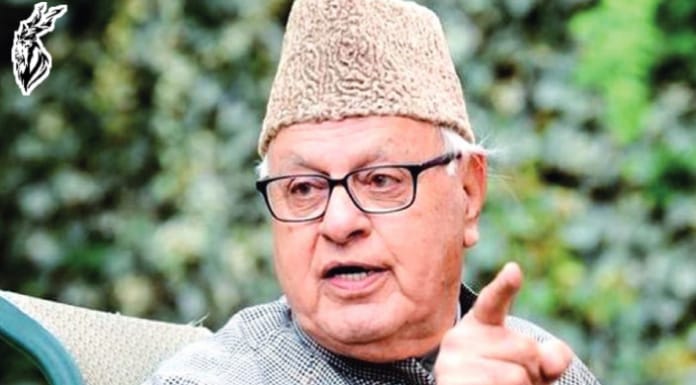

JAMMU: Former chief minister of Indian Occupied Jammu and Kashmir and president of the Jammu and Kashmir National Conference, Farooq Abdullah, escaped unhurt after a gunman opened fire outside a marriage hall in Jammu on Wednesday night, officials said.
The incident occurred in the Greater Kailash area when Farooq Abdullah and Deputy Chief Minister Surinder Choudhary were leaving a wedding ceremony.
According to officials, the suspect, identified as Kamal Singh Jamwal, a resident of the Purani Mandi area, had been waiting outside the venue and allegedly attempted to fire at Abdullah.
Security personnel, including a police inspector and sub-inspector, quickly intervened and overpowered the suspect. However, he managed to discharge one shot before being disarmed and taken into custody for questioning. No injuries were reported in the incident.
Officials said the suspect, believed to be in his 70s, was allegedly under the influence of alcohol at the time of the attack.
Farooq Abdullah had attended the function to congratulate party leader B S Chouhan on his son’s wedding.
Reacting to the incident, Abdullah’s son and chief minister Omar Abdullah said his father had narrowly escaped harm.
“Allah is kind. My father had a very close shave,” Omar Abdullah said in a statement, adding that a man carrying a loaded pistol had managed to get close to the leader before firing a shot. He credited the security team for swiftly deflecting the attack and preventing any casualties.
However, he questioned how the security breach occurred and an EX-CM protected by NSG-Z plus security was targeted this way. Omar Abdullah further added that there are more questions at the moment than answers.
Meanwhile, regional minister Javed Ahmad Rana condemned the attack and expressed relief that Farooq Abdullah and his family members were safe.
Calling the incident “very unfortunate,” Rana said the quick response by security personnel helped avert a potentially serious situation. He also raised concerns about the law and order situation in the region following the attack.