

NEW DELHI: Iran has called on India to take a more active role in addressing the escalating conflict involving the United States and Israel, expressing concern over the lack of a joint response from the BRICS bloc currently chaired by New Delhi.
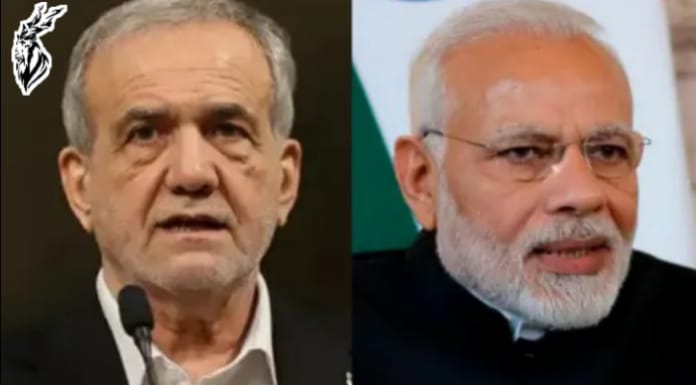
According to Iranian government readouts, the issue was raised during separate telephone conversations on Thursday between Iranian President Masoud Pezeshkian and Indian Prime Minister Narendra Modi, as well as between Iranian Foreign Minister Seyed Abbas Araghchi and India’s External Affairs Minister Subrahmanyam Jaishankar.
Tehran urged India, as the current chair of the BRICS bloc, to help mobilise the grouping to play what it described as a “strong and constructive role” in addressing the growing crisis in West Asia, according to Iranian media reports cited by The Wire.
Foreign Minister Araghchi also raised the matter in his discussion with Jaishankar — their fourth conversation since the conflict began on February 28. Jaishankar later confirmed the call in a post on social media, stating that the two sides discussed bilateral issues as well as matters related to BRICS.
According to Iran’s account published by the Mehr News Agency, Pezeshkian said Iran did not initiate the conflict and had no desire to prolong it, adding that Tehran’s attacks on US bases in the region were carried out under what it described as its right to self-defence.
The request for greater BRICS involvement underscores a diplomatic challenge for India. The bloc recently expanded to include countries such as Iran and the United Arab Emirates, which now find themselves on opposing sides of the current crisis following Iranian strikes on UAE territory.
Despite the intensifying conflict, BRICS has not issued a joint statement under India’s chairmanship, unlike last year when the grouping — then chaired by Brazil — released statements expressing concern over earlier US-Israeli strikes on Iran.
India’s position has been further complicated by its balancing approach. Prime Minister Modi had earlier expressed strong support for Israel during a speech at the Knesset, while later voicing solidarity with Gulf Arab states following Iranian strikes on US military bases in the region.
At the same time, India has avoided directly criticising the initial attacks on Iran, even as other BRICS members — including Russia, China, Brazil, and South Africa — have individually condemned them.
Officials say efforts are underway behind the scenes to develop a common BRICS position on the conflict, but progress has been limited, partly because several member states are directly affected by the hostilities.
The situation has also created economic concerns for India, particularly after disruptions in shipping through the Strait of Hormuz, a key route for the country’s energy imports.
The near-closure of the strait has triggered supply problems for liquefied petroleum gas (LPG), as India imports more than 60 per cent of its LPG requirements, with the vast majority transported through the Hormuz route. The disruption has begun affecting domestic supplies and sectors such as hospitality and food services.