
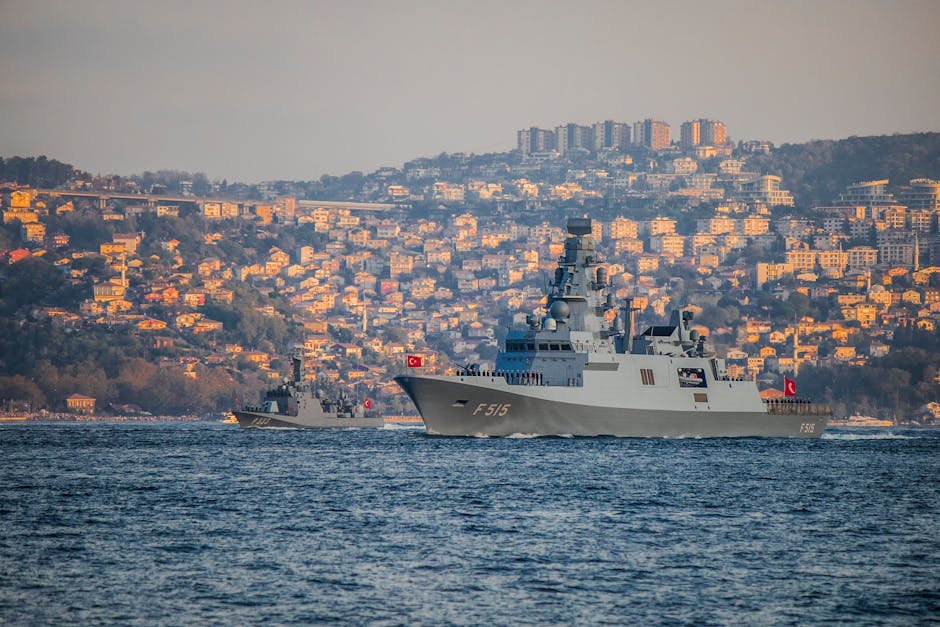

In a dramatic escalation of tensions in the Persian Gulf, former U.S. President Donald Trump has declared that a coalition of nations will deploy warships to ensure the freedom of navigation through the critical Strait of Hormuz. The announcement, made via his Truth Social platform, comes amidst heightened fears over Iran’s ability to disrupt global energy supplies by threatening this vital maritime chokepoint.
“Many countries, especially those who are affected by Iran’s attempted closure of the Hormuz Strait, will be sending War Ships, in conjunction with the United States of America, to keep the Strait open and safe,” Trump stated. While he did not specify which nations had formally committed, he expressed hope that China, France, Japan, South Korea, and Britain would contribute naval assets to the effort. The White House has not yet commented on whether any agreements are in place, leaving the operational details of the proposed coalition unclear.
The strait, a narrow passage between the Persian Gulf and the Gulf of Oman, is arguably the world’s most important oil transit corridor, with about one-fifth of global oil consumption passing through it daily. Any sustained closure would trigger severe economic shockwaves. Trump’s statement follows a series of confrontations, including his claim that the U.S. had “totally obliterated” military targets on Iran’s Kharg Island, the nation’s primary oil export terminal located northwest of the strait.
Further intensifying his rhetoric, Trump added, “In the meantime, the United States will be bombing the hell out of the shoreline, and continually shooting Iranian Boats and Ships out of the water.” This follows a previous ultimatum threatening strikes on Kharg Island’s infrastructure unless Tehran ceased attacks on vessels. Regional analysts warn that such actions risk a full-scale military confrontation. The situation remains fluid, with global markets nervously monitoring developments that could exacerbate existing supply disruptions.
The call for a multinational naval force echoes past international efforts to secure waterways but occurs in a uniquely volatile context. Iran has repeatedly asserted its capability to block the strait in response to perceived aggression, a move that would directly challenge U.S. and allied interests. The geopolitical stakes are immense, involving major powers and regional stability across the Middle East. As statements from Washington and other capitals are awaited, the world watches to see if a coalition will materialize or if brinkmanship will push the region closer to conflict.