
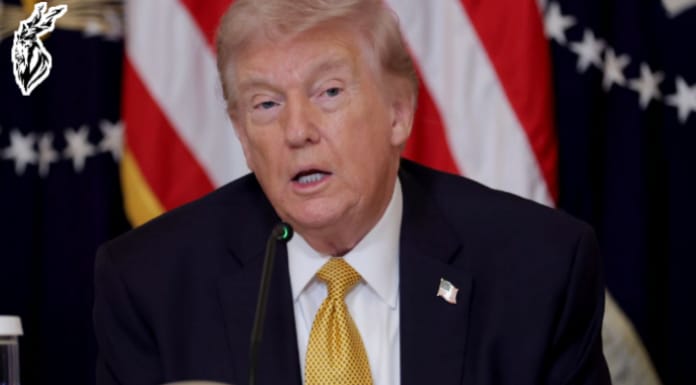

WASHINGTON — In a sharp rebuke of key international partners, former President Donald Trump has labeled NATO’s refusal to provide military assistance in the ongoing U.S.-led operation against Iran as a “very foolish mistake.” The comments, delivered during an Oval Office event on Tuesday and amplified on social media, underscore deepening tensions between Washington and its traditional allies over the three-week-old conflict in the Middle East.
“I think NATO is making a very foolish mistake,” Trump stated. “Everyone agrees with us, but they don’t want to help. And we, you know, we as the United States have to remember that because we think it’s pretty shocking.” The remarks came as the United States sought broader international support for its joint military campaign with Israel, which has triggered significant regional instability.
The immediate flashpoint is the strategic Strait of Hormuz, a critical maritime chokepoint for global oil shipments. Following sustained U.S.-Israeli airstrikes, Iran has retaliated by deploying drones, missiles, and naval mines, effectively blocking the passage of commercial tankers. Trump publicly called for a multinational naval force to help secure the waterway, but the plea was met with swift resistance.
On Monday, several major U.S. allies, including key European NATO members, indicated they had no immediate plans to deploy naval assets to the region, rebuffing Washington’s request for direct military involvement. This reluctance highlights a significant rift within the North Atlantic Treaty Organization regarding the scope and legitimacy of the current conflict.
Trump’s frustration spilled onto his Truth Social platform earlier Tuesday, where he posted, “Because of the fact that we have had such Military Success, we no longer need, or desire, the NATO Countries assistance — WE NEVER DID!” In his remarks, he also singled out non-NATO allies Japan, Australia, and South Korea, suggesting a broader disappointment with international partners beyond the transatlantic alliance.
The public criticism marks a significant moment in the conflict, now in its third week. While Trump claimed NATO countries were “supportive” of the war’s objectives, their unwillingness to contribute militarily points to concerns over being drawn into a potentially protracted and escalatory regional war. Analysts suggest the allies’ hesitation may stem from legal, political, and strategic calculations separate from Washington’s stance.
The standoff over the Strait of Hormuz has immediate economic consequences, threatening to disrupt up to 20% of the world’s oil supply and triggering volatility in global energy markets. The U.S. has historically led efforts to keep the strait open, but the current operation, conducted alongside Israel against Iranian targets, has complicated multinational cooperation.
As the conflict continues, the divergence between the U.S. and its traditional security partners appears to be widening. The refusal to provide naval support not only challenges the operational logistics of securing a key maritime route but also tests the cohesion of Western alliances in the face of complex Middle Eastern conflicts. The situation remains fluid, with diplomatic channels active but military collaboration stalled.