
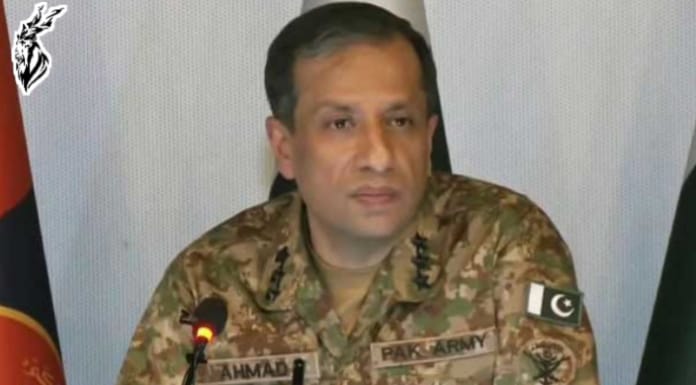

ISLAMABAD: DG ISPR on Wednesday defended Pakistan’s recent airstrike in Kabul, stating that the operation accurately targeted an ammunition and drone storage facility as part of the ongoing counterterrorism campaign, Operation Ghazab Lil Haq.
Speaking on a television programme, Director General of Inter-Services Public Relations, Ahmed Sharif Chaudhry, said intelligence reports had correctly identified the site as a key storage location for weapons and equipment used by militant groups.
“Our intelligence was correct. We struck an ammunition storage site, which led to secondary explosions,” he said, adding that video evidence and post-strike visuals supported Pakistan’s claims. According to the military, the facility housed drones, ammunition, and older missile systems.
The strike is part of a broader military campaign launched last month against militant networks operating along the Pakistan-Afghanistan border. Chaudhry emphasised that the operation is not a standalone effort but part of Pakistan’s wider war against terrorism.
He stated that militant groups, including the banned Tehreek-i-Taliban Pakistan, were using Afghan territory as a base to carry out attacks inside Pakistan. He also claimed that several militant leaders were being sheltered across the border.
Addressing concerns about civilian casualties, the ISPR chief said precision-guided munitions were used to minimise collateral damage, rejecting reports from Afghan authorities that a drug rehabilitation centre had been hit. He described such claims as lacking credibility and suggested the site may have been used for militant purposes.
Chaudhry further stated that Pakistan had targeted dozens of locations across Afghanistan in recent strikes aimed at dismantling “terrorist support infrastructure,” including command centres, storage depots and training facilities.
He reiterated that Pakistan does not seek conflict with the Afghan people but insists that Afghan territory must not be used for attacks against it. “Our position is clear: Afghanistan should not serve as a base for terrorism against Pakistan,” he said.
The remarks come amid heightened tensions between Islamabad and Kabul following cross-border strikes and competing claims over the nature of the targeted sites.