
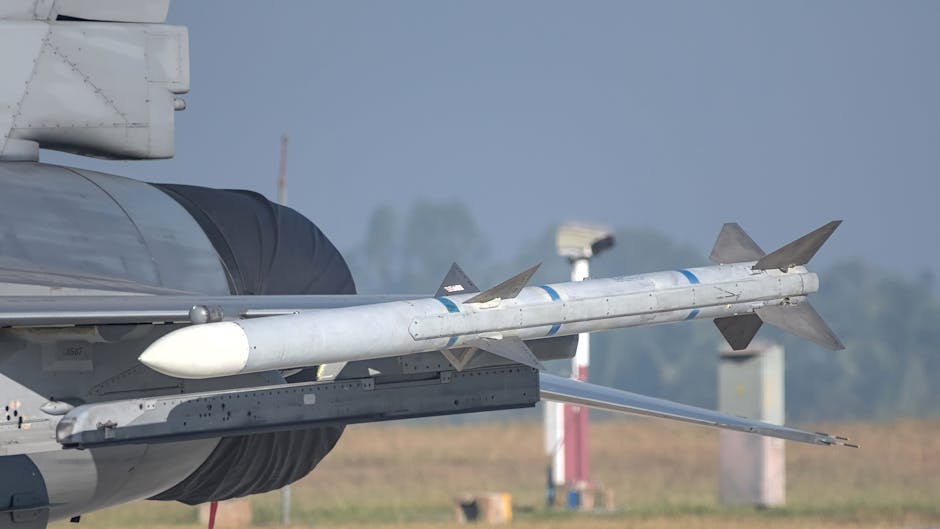

ISLAMABAD — Pakistan’s Foreign Office has issued a firm rebuttal to recent assertions by U.S. Director of National Intelligence Tulsi Gabbard, who identified Pakistan’s evolving missile program as a growing strategic concern that could potentially bring the American homeland within range. During the weekly press briefing on Thursday, FO Spokesperson Tahir Hussain Andrabi categorically dismissed the claims, emphasizing that Pakistan’s strategic capabilities are “exclusively defensive in nature” and aimed solely at safeguarding national sovereignty and regional stability.
“Pakistan’s missile programme, which remains well below intercontinental range, is firmly rooted in the doctrine of credible minimum deterrence vis-à-vis India,” Andrabi stated in response to media queries. The spokesperson’s remarks came a day after Gabbard presented the 2026 Annual Threat Assessment before the Senate Intelligence Committee, where she also named Iran, China, Russia, and North Korea as nations actively developing new missile delivery systems.
Gabbard warned that these countries’ advancements in both nuclear and conventional warheads could threaten U.S. security, specifically noting that “Pakistan’s ballistic missile development potentially could include intercontinental ballistic missiles (ICBMs) capable of reaching the US homeland.” This assessment places Pakistan among a group of states viewed by U.S. intelligence as pursuing capabilities that extend beyond regional conflicts.
In his detailed response, Andrabi drew a sharp contrast with neighboring India, whose missile development he described as exceeding 12,000 kilometers. “This reflects a trajectory that extends beyond regional security considerations and is certainly a cause of concern for the neighbourhood and beyond,” he asserted. The spokesperson’s comments underscore long-standing tensions between the nuclear-armed rivals, whose complex relationship has been defined by multiple conflicts and an ongoing arms race.
Despite the strong rejection of Gabbard’s characterization, Andrabi affirmed Pakistan’s commitment to “constructive engagement with the US, anchored in mutual respect, non-discrimination, and factual accuracy.” He urged Washington to adopt “a more measured and considered approach that aligns with South Asia’s strategic imperatives and advances peace, security, and stability across the region.”
The exchange highlights the delicate balance Pakistan maintains in its foreign policy, seeking to preserve its defensive deterrence posture while managing relations with a major ally that provides significant economic and military assistance. As South Asia’s strategic landscape continues to evolve, such diplomatic exchanges are likely to remain crucial in shaping both bilateral relations and regional security dynamics.
Source: Geo News