
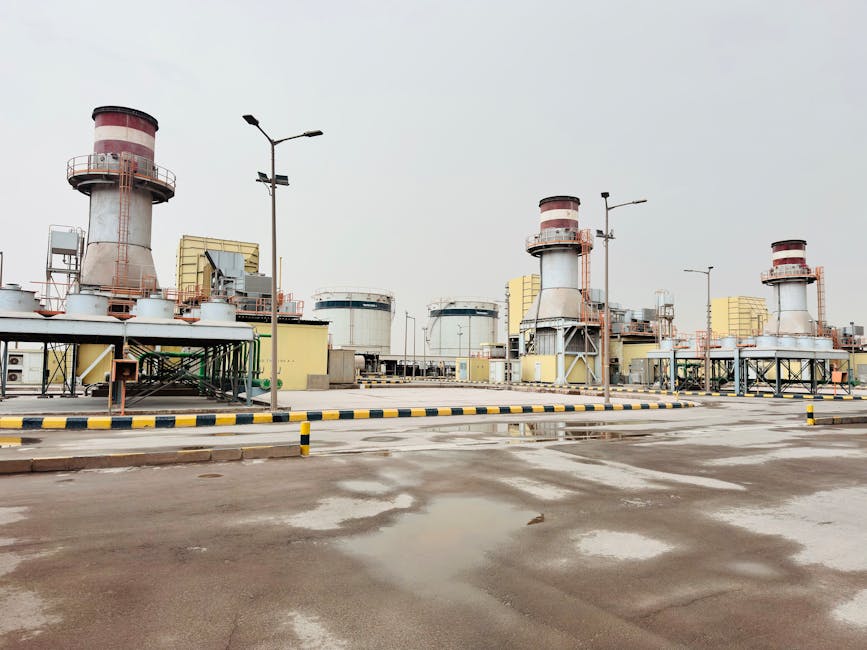

WASHINGTON/DOHA — U.S. President Donald Trump publicly urged Israel on Thursday to refrain from further attacks on Iranian natural gas infrastructure, as retaliatory strikes on energy facilities sent global prices soaring and deepened the escalating U.S.-Israeli military campaign against Iran. The warning came amid a sharp spike in energy markets following Iran’s response to an Israeli strike on its South Pars gas field—a major retaliation that targeted Qatar’s Ras Laffan Industrial City, a critical hub processing approximately one-fifth of the world’s liquefied natural gas (LNG).
The assault on Ras Laffan, which analysts say could take years to repair, underscores Iran’s continued capacity to inflict severe economic damage despite U.S.-led efforts to curb its influence. Simultaneously, Saudi Arabia’s primary Red Sea port—a diversion point for exports avoiding the Iranian-blockaded Strait of Hormuz—was also hit, highlighting vulnerabilities in Gulf air defenses. Trump, facing political pressure from rising fuel costs among his base, has criticized allies for their cautious stance on securing the strategic waterway, through which about 20% of global oil transits.
In a tense Oval Office meeting with Japanese Prime Minister Sanae Takaichi, Trump asserted he had directed Israeli Prime Minister Benjamin Netanyahu to avoid repeating such strikes. “I told him, ‘Don’t do that,’ and he won’t do that,” Trump told reporters, though he denied plans to deploy additional U.S. ground troops to the region. This contrasts with reports from U.S. officials, cited by Reuters, that thousands more American forces might be sent to the Middle East as the conflict enters its third week with over 2,000 casualties, mostly in Iran and Lebanon.
The crisis has triggered international alarm, with Britain, France, Germany, Italy, the Netherlands, and Japan issuing a joint statement pledging to support efforts to ensure safe passage through the Strait of Hormuz and stabilize energy markets. However, German Chancellor Friedrich Merz emphasized that any contribution would await an end to hostilities, reflecting broader skepticism among U.S. allies about the war’s unclear objectives and limited control. The discord was further exposed by conflicting accounts of the South Pars attack: while Trump claimed the U.S. was unaware, Israeli officials stated it was coordinated with Washington, though unlikely to be repeated.
U.S. Defense Secretary Pete Hegseth maintained that American goals—focusing on destroying Iran’s ballistic missile capabilities and navy—remain “on target,” but Director of National Intelligence Tulsi Gabbard noted a divergence with Israel’s aim to “disable the Iranian leadership.” As Qatar loses a sixth of its gas exports due to the Ras Laffan damage, Iran’s military warned that strikes on its energy infrastructure have ushered in a “new stage” of targeting U.S.-linked facilities. With no resolution in sight, the escalating tit-for-tat threatens to plunge global markets into a prolonged energy shock, testing alliances and regional stability. For more on the geopolitical context, see Al Jazeera’s coverage of Middle East tensions.
Source: ARY News