
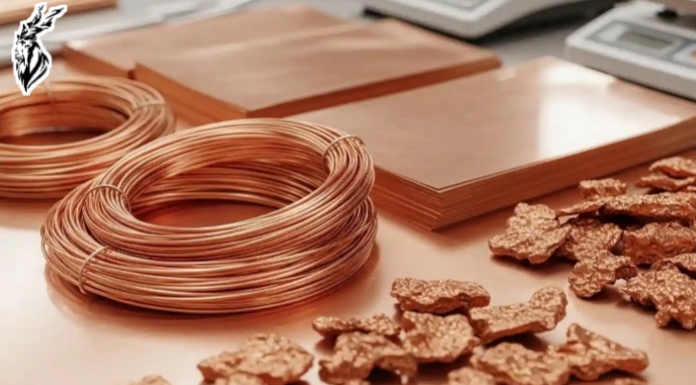

Copper prices in Pakistan have held steady on May 23, 2026, with high-quality Millberry scrap copper trading at approximately Rs. 5,500 per kg in major cities including Karachi, Lahore, Islamabad, and Gujranwala. Refined new copper, known for its superior purity, commands a premium ranging from Rs. 5,800 to Rs. 6,200+ per kg depending on quality and vendor. Domestic rates remain elevated due to import tariffs, shipping costs, taxes, robust local demand from electrical and construction sectors, and the prevailing USD/PKR exchange rate.
Internationally, copper prices showed positive movement, with the benchmark reaching around $6.35 per pound (about $13,700+ per tonne on the London Metal Exchange) after a daily increase of roughly 1.4%. Converting at approximately 280 PKR per USD, the base international level equals about Rs. 3,900-4,000 per kg before duties and domestic adjustments. Analysts project copper trading near $6.35 by quarter-end and climbing toward $7.04 over the next 12 months, driven by industrial needs and clean energy expansion.
Copper, often called “Dr. Copper” for its ability to gauge global economic health, reflects active production, major construction projects, and progress in renewable energy. In Pakistan, copper rate movements directly impact costs for electrical cables, wiring, construction projects, solar installations, and scrap recycling operations. The metal’s crucial role in the global energy transition ensures firm future demand, particularly from electric vehicles, renewable power systems, battery storage, data centers, and modernized electricity grids.
Key uses driving copper demand include electrical wiring, power transmission, motors, and transformers in residential, commercial, and industrial settings. The electric vehicle industry requires significantly more copper than conventional cars for motors, batteries, and charging infrastructure. Renewable energy projects depend heavily on copper for solar panel connections, wind turbine components, and storage units. Construction applications include plumbing, roofing, and antimicrobial surfaces. Electronics, 5G networks, and AI data centers further increase demand through high-speed cabling and circuit boards. Notably, approximately 80% of all copper ever mined remains in use today due to its superior recyclability, helping sustain supply even as demand grows.
Source: ARY News