
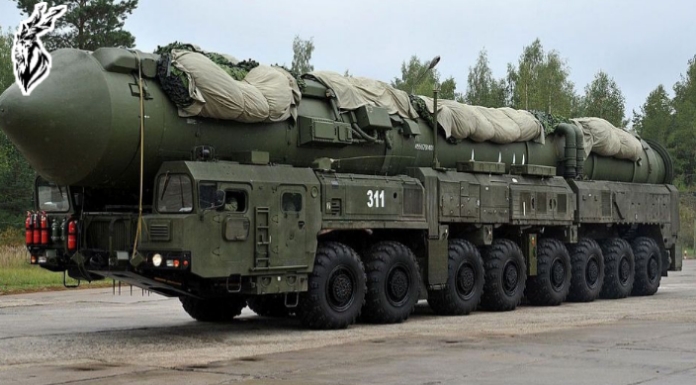

Russia has once again deployed its experimental Oreshnik hypersonic ballistic missile against Ukraine, raising questions about the weapon’s capabilities and strategic intent. The missile, whose name means ‘Hazel Tree’ in Russian, is an intermediate-range system that Moscow has only used twice in combat, most recently in a strike on the western city of Lviv.
The Oreshnik is based on the RS-26 Rubezh, originally developed as an intercontinental ballistic missile (ICBM). Its distinguishing feature is the ability to carry multiple independently targetable reentry vehicles (MIRVs), a technology typically reserved for longer-range ICBMs. According to experts cited by Reuters, this allows it to simultaneously strike multiple targets with high precision. The missile is capable of carrying both nuclear and conventional warheads, though Ukrainian officials stated the most recent strike used dummy warheads.
Ukrainian sources reported that the missile flew at approximately 13,000 kph (8,000 mph) during the January attack, making it extremely difficult to intercept. Russian President Vladimir Putin has claimed the Oreshnik is ‘impossible to intercept’ and possesses destructive power comparable to a nuclear weapon even with conventional payloads, though Western experts have dismissed these assertions as exaggerated. In December 2024, a U.S. official described the missile as ‘experimental’ and noted Russia likely possessed only a handful.
The strike on Lviv caused minor damage to concrete structures and left craters, according to a senior Ukrainian official. Security experts suggest the use of dummy warheads was a deliberate signal aimed at NATO allies, demonstrating Russia’s capacity to strike European targets with a nuclear-capable hypersonic weapon. This comes amid heightened tensions over British and French plans to deploy troops to Ukraine after a potential ceasefire. Moscow has warned that any European forces would be ‘legitimate targets.’
Some analysts believe the Oreshnik launch was also designed to showcase Russian military strength following recent geopolitical setbacks, including the U.S.-backed ouster of President Nicolás Maduro in Venezuela and the seizure of a Russian-flagged oil tanker in the North Atlantic. For more on hypersonic missiles, see Wikipedia.
Experts assess that Russia’s limited stockpile of Oreshnik missiles will likely restrict their use. As BBC News reports, if Moscow believes its warning has been received, further launches may be delayed. The situation remains fluid, with global attention fixed on the evolving conflict.