
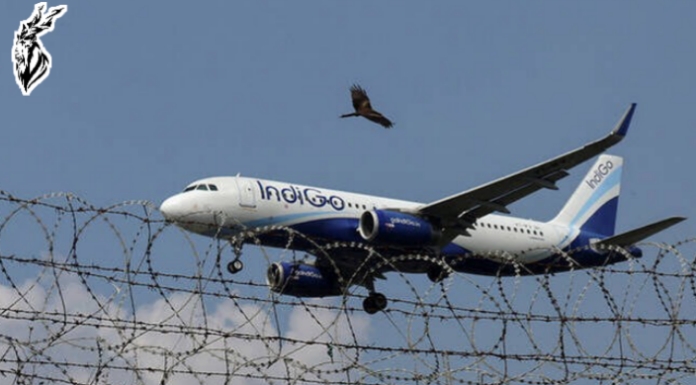

Pakistan has extended its airspace ban on Indian civilian and military aircraft for another month, until July 24, according to a Notice to Airmen (NOTAM) issued by the Pakistan Airports Authority (PAA) on Wednesday. The previous extension was set to expire on June 24.
“Pakistan airspace is not available for Indian-registered aircraft and aircraft operated, owned, or leased by Indian airlines or operators, including military flights,” the NOTAM stated. The closure applies to all flights, including overflights, and affects major carriers such as Air India and IndiGo.
India and Pakistan have kept their airspaces closed to each other’s airlines since late April 2025, when tensions escalated following a deadly attack in the Pahalgam area of Indian Illegally Occupied Jammu and Kashmir (IIOJK). According to Al Jazeera, the attack killed at least 26 people, prompting India to impose restrictions on Pakistani airspace and suspend cross-border travel. Pakistan retaliated with similar measures, leading to a complete airspace blockade between the two nuclear-armed rivals.
The prolonged closure has severely impacted Indian aviation. Air India Group recorded a loss of more than $2 billion in the 2025-26 fiscal year, according to shareholder Singapore Airlines’ annual report. India’s second-largest airline has been grappling with operational disruptions caused by the Iran conflict and Pakistan’s ban on Indian carriers from using its airspace. Singapore Airlines (SIA), which owns a 25% stake in Air India, reported that the Indian carrier group posted losses of 3.56 billion Singapore dollars (approximately $2.8 billion) for the 12 months ending March 31, 2026.
In a report accompanying SIA’s disclosures, auditor KPMG noted that management had identified indicators of impairment in its Air India investment, citing challenging operating conditions and heightened geopolitical uncertainty. Air India, which is not publicly listed in India and has yet to file its earnings with local regulators, declined to comment. In the previous fiscal year (2024-25), the airline reported a standalone loss of $415 million, while consolidated losses, including budget carrier Air India Express, stood at $1.13 billion.
The airspace ban also forces Indian carriers to take longer routes, increasing fuel costs and flight times. For example, flights to Europe and the Middle East now avoid Pakistani airspace, adding hours to journeys. According to BBC News, the rerouting has led to higher ticket prices and reduced capacity, further straining the aviation sector.
Experts warn that the continued closure could have long-term economic consequences for both countries. The ban also affects cargo operations, which are vital for trade between South Asia and the rest of the world. As tensions remain high, no immediate resolution is in sight, leaving airlines and passengers in limbo.
Source: ARY News