
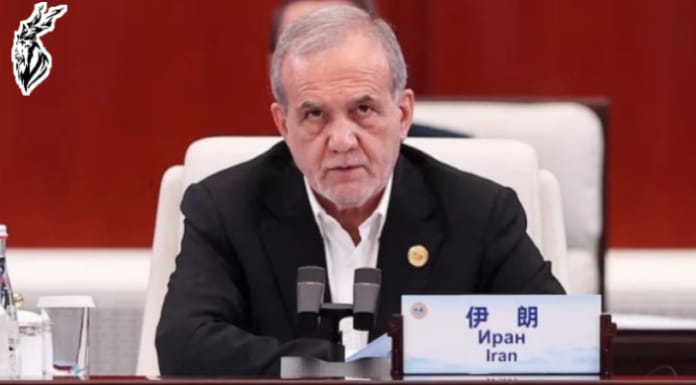

ISLAMABAD: Iran’s President Masoud Pezeshkian has acknowledged proposals from Pakistan and Russia aimed at easing tensions in the ongoing conflict involving Iran, the United States and Israel.
In a statement posted on social media late Wednesday, Pezeshkian said he had discussed the situation with leaders from both countries and reiterated Tehran’s willingness to pursue peace in the region. However, he stressed that any resolution to the conflict must include recognition of Iran’s rights, payment of reparations and firm international guarantees against future attacks.
The remarks followed a telephone conversation between Shehbaz Sharif, the prime minister of Pakistan, and Pezeshkian as Islamabad quietly explored the possibility of a ceasefire to halt hostilities that have now entered a second week.
Diplomatic sources said the United States had earlier attempted to initiate talks by sending proposals through its envoy Steve Witkoff, suggesting potential dates to halt the fighting. Iranian officials reportedly did not respond to the proposals, prompting Washington to approach European and regional countries to help convey the message or facilitate mediation.
During the call, Prime Minister Sharif offered condolences following the assassination of Iran’s former supreme leader Ali Khamenei and congratulated Iran on the appointment of his successor, Mojtaba Khamenei.
Pezeshkian also referenced his recent discussion with Russian President Vladimir Putin, during which Moscow reiterated support for de-escalating the conflict through political dialogue. According to the Kremlin, Putin also shared suggestions for reducing tensions during a separate conversation with Donald Trump, the US president.
Pakistan reaffirms support for Saudi Arabia
Meanwhile, Pakistan’s spokesperson for foreign media Mosharraf Zaidi said Islamabad would stand by Saudi Arabia under all circumstances.
Speaking to Bloomberg, Zaidi said the relationship between the two countries was based on a longstanding principle of mutual support.
“The question is not whether Pakistan might come to Saudi Arabia’s aid,” he said, adding that both countries had historically supported each other whenever required.
Zaidi also emphasised that Pakistan’s priority remained preventing further escalation in the region, noting that the country was maintaining close contact with both Saudi and Iranian leadership.
He said recent diplomatic engagements included discussions between Ishaq Dar, Pakistan’s deputy prime minister and foreign minister, and Iran’s foreign minister Abbas Araghchi over the past two weeks.
Pakistan’s military leadership has also remained engaged in regional diplomacy, with Asim Munir, the chief of army staff, recently visiting Saudi Arabia.
Zaidi added that Riyadh had already made arrangements to support Pakistan’s fuel supply chain, helping ensure the availability of oil and petroleum products during the ongoing regional crisis.
He warned, however, that alternative supply routes could extend fuel delivery times to Pakistan from the usual five to six days to nearly three weeks, potentially creating temporary gaps in supply.