
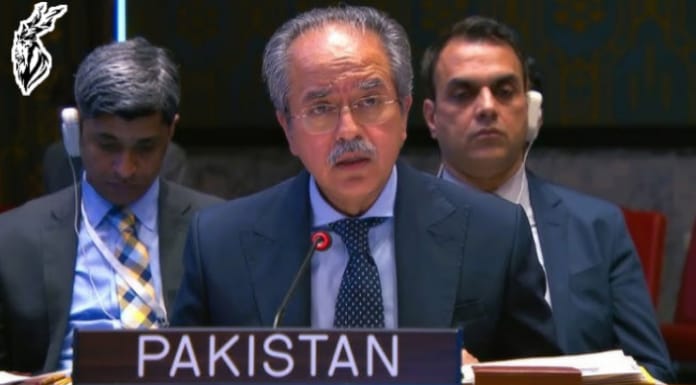

UNITED NATIONS: Pakistan has warned the United Nations Security Council that the collapse of diplomatic engagement in the Middle East has further complicated the already sensitive issue of Iran’s nuclear programme.
Speaking during a Security Council briefing on the United Nations Security Council Resolution 1737 Committee, Pakistan’s Permanent Representative Asim Iftikhar Ahmad said divisions within the council over sanctions monitoring mechanisms were affecting the functioning of the body.
“The council remains divided on the 1737 Committee issue,” Ambassador Ahmad said, noting that disagreements had delayed the appointment of chairs for several subsidiary bodies, thereby hindering their work.
The committee, created under United Nations Security Council Resolution 1737 in 2006, oversees sanctions related to Iran’s nuclear activities and reviews reports submitted by the International Atomic Energy Agency (IAEA). Its responsibilities include monitoring compliance, examining exemption requests and recommending sanctions designations.
The discussion took place amid rising tensions in the Middle East. António Guterres, Secretary-General of the United Nations, warned that the escalating crisis posed a “grave threat to international peace and security” and had already caused widespread suffering among civilians.
Guterres cautioned that continued military escalation could trigger a broader and uncontrollable regional conflict, urging all sides to pursue de-escalation, dialogue and a return to meaningful negotiations.
According to UN agencies, the ongoing hostilities have resulted in severe humanitarian consequences, with more than 1,100 children reportedly killed or injured and millions facing displacement and disruption to education.
Addressing the council, Ambassador Ahmad said recent developments — including what he described as “unprovoked and unwarranted attacks on Iran” — had significantly affected the context of discussions surrounding Tehran’s nuclear programme.
He emphasised that despite the current tensions, the core principles of the Joint Comprehensive Plan of Action (JCPOA) and the adoption of United Nations Security Council Resolution 2231 remained important foundations for resolving the issue through diplomacy.
“The JCPOA was a unique instrument of dialogue, diplomacy and pragmatism,” he said, noting that it provided a roadmap for addressing the concerns of all parties through reciprocal commitments.
Reiterating Pakistan’s stance against the use of force, Ahmad said Islamabad had condemned attacks on civilian infrastructure and strikes on nuclear facilities under international safeguards.
“Strikes against nuclear facilities carry serious environmental and safety risks for populations across the region,” he warned.
He also stressed the importance of allowing the International Atomic Energy Agency to continue its verification work without disruption, describing the agency’s role as essential for ensuring compliance with nuclear safeguards.
Referring to United Nations Security Council Resolution 2788, adopted last year, Ahmad urged the council to revive the spirit of peaceful conflict resolution enshrined in the United Nations Charter in order to prevent further escalation in the region.