
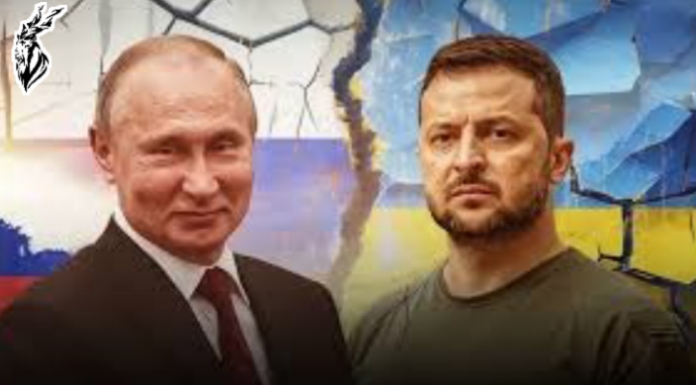

Ukrainian President Volodymyr Zelenskyy has disclosed that some of Ukraine’s key international allies have privately urged Kyiv to consider scaling back its long-range strikes on Russia’s energy sector, particularly oil infrastructure, as global energy prices experience volatility. The revelation came during a WhatsApp briefing with journalists on Monday, where Zelenskyy indicated openness to reciprocal de-escalation if Moscow halts its systematic attacks on Ukraine’s own energy grid.
“Recently, following such a severe global energy crisis, we have indeed received signals from some of our partners asking about how to reduce our responses in the oil sector and the energy sector of the Russian Federation,” Zelenskyy stated. A source familiar with the discussions, cited by Reuters, suggested the initial diplomatic feelers may have originated from Moscow, with U.S. officials subsequently conveying the message to Ukrainian counterparts during routine talks. The U.S. State Department and Russian embassy in Washington did not immediately comment on the reports.
Zelenskyy framed Ukraine’s position as conditional, emphasizing readiness for an Easter ceasefire and a mutual reduction in energy-targeted strikes. “I am ready to reciprocate if Russia stopped attacking Ukraine’s energy system,” he affirmed. This diplomatic maneuvering occurs against a backdrop of relentless Russian assaults on Ukrainian civilian infrastructure, which on Monday alone killed two people and injured over twenty in central and northern regions, according to regional officials.
Simultaneously, Ukraine fortified its defense partnerships, announcing a landmark 10-year agreement with Bulgaria for joint weapons production, including drones. The pact, signed during a visit by Bulgarian Interim Prime Minister Andrey Gyurov to Kyiv, leverages Bulgaria’s historical arms manufacturing expertise from the Soviet era, now aligned with NATO standards. “This is not a mere formality, but a joint commitment to our Euro-Atlantic security,” Gyurov declared. Zelenskyy highlighted the accord’s importance for systematizing security cooperation and keeping pace with rapidly evolving drone technology, a critical component of Ukraine’s defense strategy.
In a parallel development, Zelenskyy reported securing energy support agreements during a recent four-day Middle East tour, including a deal for annual diesel deliveries to Ukraine, though specifics remain undisclosed. These efforts aim to bolster Ukraine’s resilience as it contends with targeted Russian campaigns against its power infrastructure, detailed in analyses by the BBC.
The interplay of diplomatic pressure, military collaboration, and energy diplomacy underscores the complex geopolitical landscape of the conflict, now in its 1,496th day. As global energy markets react to the war’s disruptions, Ukraine balances allied counsel with strategic imperatives, while continuing to seek international support against aggression. The situation reflects broader tensions in European security, where economic stability and military aid intersect in shaping the war’s trajectory.
Source: The Guardian