
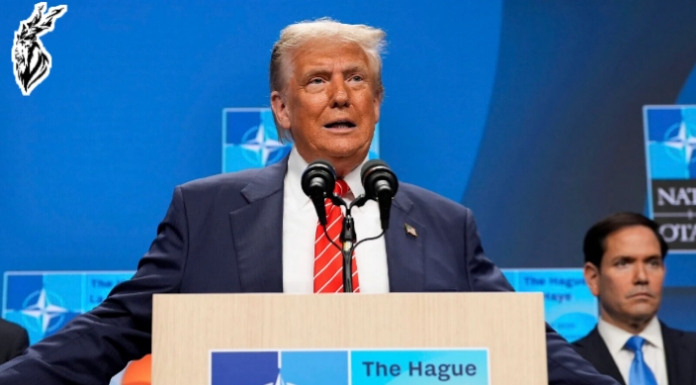

The North Atlantic Treaty Organization, which has weathered decades of geopolitical storms from the Cold War to the Ukraine conflict, now confronts what analysts describe as its most existential threat since its 1949 founding. The catalyst: President Donald Trump’s escalating fury over European allies’ refusal to deploy naval forces to secure the Strait of Hormuz amid the ongoing U.S.-Israeli air campaign against Iran.
In a Wednesday interview with Reuters, Trump openly questioned America’s continued NATO membership, asking “Wouldn’t you if you were me?” after European capitals declined to assist with securing the critical global shipping chokepoint following the February 28 commencement of hostilities. While stopping short of directly condemning NATO in a subsequent speech, Trump’s comments have triggered unprecedented alarm among diplomats who fear the United States may no longer honor Article 5’s collective defense commitment, regardless of whether Washington formally withdraws.
“This is the worst place NATO has been since it was founded,” said Max Bergmann, former State Department official now leading the Europe, Russia, and Eurasia Program at the Center for Strategic and International Studies. “It’s really hard to think of anything that even comes close.” The crisis represents a stark departure from February, when NATO Secretary-General Mark Rutte dismissed European self-defense without U.S. involvement as “a silly thought.” Today, that scenario has become the default expectation among many officials.
The current rupture differs fundamentally from previous tensions during Trump’s first term, when European leaders believed diplomatic flattery could maintain alliance cohesion. According to conversations with dozens of current and former officials on both sides of the Atlantic, that confidence has evaporated. U.S. officials complain NATO has become “a one-way street,” particularly regarding restricted access to European airfields and airspace during the Iran conflict. European counterparts counter they’ve received no specific requests for Strait of Hormuz assistance and note Washington’s inconsistent messaging about whether such operations would occur during or after hostilities.
General Francois Lecointre, France’s armed forces chief from 2017-2021, captured the seismic shift: “NATO remains necessary, but we must be capable of thinking of NATO without the Americans. Whether it should even continue to be called NATO is a valid question.” The alliance’s deterioration comes as Europe faces renewed Russian assertiveness, leaving nations that long relied on NATO’s security umbrella increasingly vulnerable.
White House spokeswoman Anna Kelly reinforced Trump’s position, stating “the United States will remember” European reluctance. As the 76-year-old alliance teeters, analysts warn the mutual trust underpinning transatlantic security may be irreparably damaged, potentially reshaping global power dynamics for generations.
Source: ARY News