
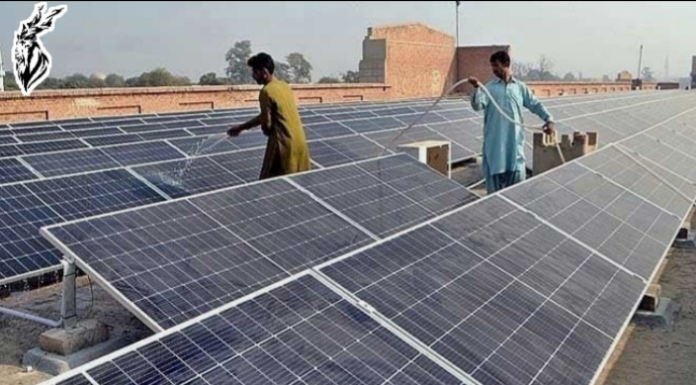

In the remote village of Dasht, Balochistan, farmer Karim Baksh tends to his watermelon fields with newfound confidence, his diesel-powered irrigation pump replaced by rows of gleaming solar panels. His story represents a quiet revolution sweeping across Pakistan—one that’s providing unexpected resilience as global energy markets convulse amid the escalating US-Israel conflict with Iran.
“Now, I don’t care if diesel prices increase,” Baksh declares, gesturing toward the scorching sun that powers his farm. “As long as there is this sun, I can grow my watermelons.” Three years ago, the farmer borrowed 300,000 Pakistani rupees ($1,075) to install solar panels when fuel prices skyrocketed following Russia’s invasion of Ukraine. Today, that investment is shielding his livelihood from the latest energy shock.
Pakistan’s traditional energy vulnerability is stark. According to the Council on Foreign Relations, 80% of the country’s oil imports pass through the Strait of Hormuz—the critical maritime chokepoint now threatened by regional conflict—while 99% of its liquefied natural gas comes from Qatar and the United Arab Emirates. A prolonged closure could trigger severe energy shortages, power outages, and economic disruption in the nation of 250 million people.
Yet a remarkable transformation is unfolding across Pakistan’s rooftops and farmlands. Millions of individuals and businesses have embraced solar power, creating what experts describe as a decentralized energy shield. A recent study by Renewables First and the Centre for Research on Energy and Clean Air reveals that Pakistan’s rooftop solar boom has saved the country over $12 billion in fuel imports since 2018, with projected savings of $6.3 billion this year alone.
This grassroots energy revolution has particular significance in Balochistan, Pakistan’s largest province, where temperatures can reach 51°C (124°F) in summer. Farmers like Baksh, who once reduced cultivation due to unaffordable diesel, now irrigate continuously using solar power. The shift represents both practical adaptation and strategic insulation from global market volatility.
While Pakistan’s centralized energy infrastructure remains vulnerable to international supply disruptions, the distributed nature of solar adoption provides crucial resilience. As the BBC has reported in coverage of global energy transitions, decentralized renewable systems can buffer nations against geopolitical shocks that threaten traditional supply chains.
The solar surge hasn’t followed a single national master plan but has emerged organically through individual decisions—farmers abandoning diesel pumps, businesses cutting operational costs, and households seeking reliable electricity amid frequent grid outages. This bottom-up movement is now paying unexpected dividends as regional tensions escalate.
Experts note that Pakistan’s solar adoption, while impressive, represents just the beginning of what’s needed for comprehensive energy security. The country still faces challenges with energy storage, grid integration, and equitable access. However, the current crisis demonstrates how renewable energy investments can serve as both economic tools and strategic assets.
As global powers navigate the complex geopolitics of the Middle East, Pakistan’s experience offers a case study in energy resilience. The sunlight that once merely baked Balochistan’s arid landscape now powers irrigation, businesses, and homes—transforming a climatic challenge into an energy opportunity and providing a buffer against international turmoil.
Source: Al Jazeera