
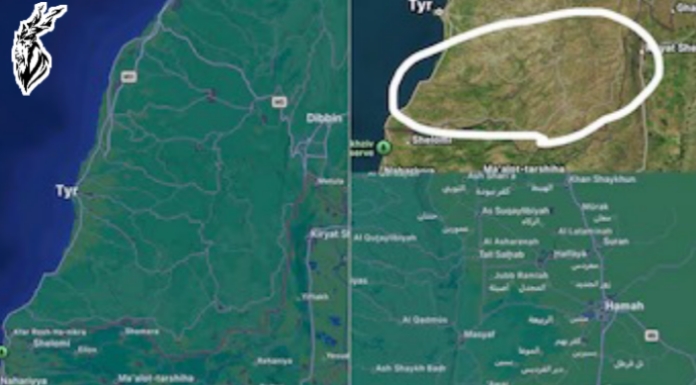

Apple Maps has sparked international controversy and accusations of political bias after users discovered that most village and town labels in South Lebanon have disappeared from the platform, creating what appears as a blank region on the digital map. The timing of this virtual erasure coincides with escalating clashes between Israel and Hezbollah along the border, leading to widespread speculation about the tech giant’s motives and responsibilities in conflict zones.
The issue gained traction on social media platform X, where users shared screenshots showing South Lebanon devoid of place names while neighboring Israel and Syria maintained their detailed labels. This stark contrast became more apparent when compared to Google Maps, which continues to display the region’s geographical markers without alteration. The discrepancy has fueled concerns that Apple may be engaging in digital cartography that aligns with geopolitical narratives.
Ethan Levins, one of many users who documented the phenomenon, posted: “Apple has removed Lebanese village names in Southern Lebanon. As Israel invades, they are already setting the state to justify occupation. I’ve never seen something like this.” His observation reflects growing anxiety about how digital platforms might influence perceptions of territorial disputes, particularly as Israel-Hezbollah tensions continue to escalate.
The timing is especially sensitive given recent discussions among Israeli officials about potential annexation up to the Litani River, a historical reference point in regional conflicts. By presenting South Lebanon as an unlabeled territory, critics argue Apple Maps could be inadvertently supporting narratives of depopulation or territorial ambiguity. This virtual blank space emerges as real-world conflicts intensify along the border, raising questions about the platform’s neutrality.
Apple has yet to issue a comprehensive statement addressing the specific removal of South Lebanese labels. While some technology analysts suggest this could result from routine software glitches or flawed data updates—common issues in Apple’s mapping history—the geopolitical context makes simple technical explanations insufficient for many observers. The company’s mapping division has faced previous criticism for inaccuracies, but the current situation carries unprecedented political implications.
Digital mapping platforms like Apple Maps serve critical functions beyond navigation, providing situational awareness and geographical context during emergencies. When such platforms alter or omit territorial information during active conflicts, the consequences extend beyond inconvenience to potentially influencing humanitarian responses and international perceptions. The incident highlights broader concerns about how technology companies manage geographical data in politically sensitive regions.
As the digital landscape becomes increasingly intertwined with geopolitical realities, this incident underscores the need for transparent protocols in how mapping platforms handle contested territories. With millions relying on these services for accurate information, the disappearance of South Lebanon’s labels serves as a cautionary tale about the power—and responsibility—of digital cartography in shaping our understanding of the world.
Source: ARY News