
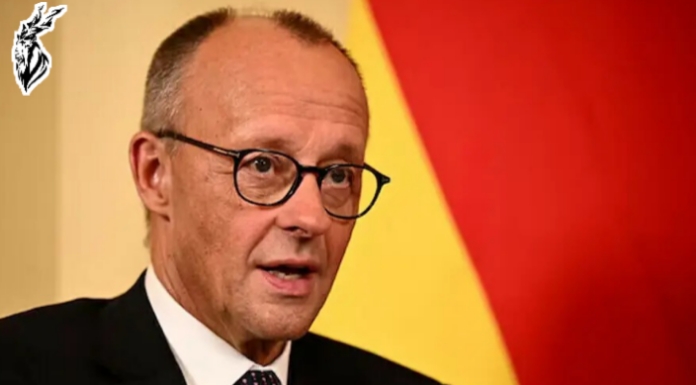

BERLIN, Germany — Chancellor Friedrich Merz announced on Monday that Germany will implement temporary fuel tax reductions to alleviate economic strain on households and businesses amid an escalating energy crisis fueled by the ongoing Middle East conflict. The decision follows a sharp surge in oil prices after the collapse of U.S.-Iran peace talks and a U.S. blockade of the Strait of Hormuz, a critical global oil transit route.
Merz emphasized that the war is “the root cause of the problems we face in our own country,” while underscoring Berlin’s diplomatic efforts to help resolve the conflict. After consultations with coalition partners, the government approved a cut of approximately 17 euro cents ($0.19) per liter on petrol and diesel for two months. “This will very quickly improve the situation for drivers and businesses in the country, and above all for those who, mainly for professional reasons, spend a great deal of time on the road,” Merz stated at a Berlin press conference.
Fuel prices in Germany have risen dramatically since late February, when hostilities erupted between a U.S.-Israeli coalition and Iran. The government also revealed that employers can now provide tax-free bonuses of up to 1,000 euros ($1,170) to employees to offset inflationary pressures, which have begun to climb in Europe’s largest economy. However, Merz cautioned that public funds have limits: “We cannot offset every single outcome on the market with government funds. The state cannot absorb all uncertainties, not all risks, not all disruptions in global politics.”
To finance the fuel tax relief, Finance Minister Lars Klingbeil confirmed plans to accelerate an increase in tobacco taxes. The move comes as Germany’s energy-intensive manufacturing sector, already challenged by U.S. tariffs and Chinese competition, faces additional headwinds from soaring energy costs. Merz warned of prolonged economic repercussions, noting, “The German economy will face a significant burden over an extended period.” Leading economic institutes have revised growth forecasts downward, projecting just 0.6% expansion for 2026 compared to a pre-war estimate of 1.3%, as reported by Reuters.
The tax cuts reflect a broader European struggle to manage energy market volatility linked to geopolitical tensions. Analysts suggest that while temporary relief may ease immediate pressure, sustained instability in the Middle East could necessitate longer-term policy adjustments. For context on the region’s strategic importance, see BBC Middle East coverage.
Source: ARY News