
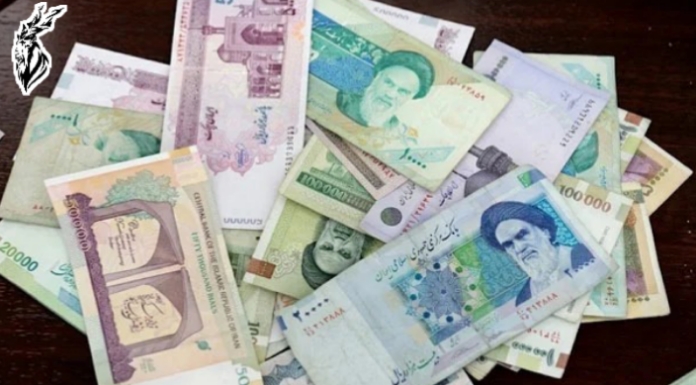

KARACHI: In a significant crackdown on cross-border financial crime, Pakistani law enforcement has intercepted approximately 29.69 billion Iranian rials being smuggled into Karachi, arresting nine members of an inter-provincial gang. The operation, described as one of the largest currency seizures in recent years, highlights ongoing challenges with illicit financial flows across the Iran-Pakistan border.
Senior Superintendent of Police (SSP) Keamari Malik Sanghar confirmed that authorities foiled the sophisticated smuggling attempt after discovering the foreign currency concealed inside the tires of two vehicles. The suspects, including women, were apprehended during the coordinated operation. “This was a highly organized attempt to bypass our detection systems,” stated SSP Sanghar. “The gang utilized multiple transit routes from Iran through Balochistan before reaching Karachi.”
The seized Iranian rials, equivalent to billions in local currency, have been transferred to the Federal Investigation Agency (FIA) for forensic examination and further investigation. Authorities are now working to unravel the complete network behind the smuggling operation, including potential connections to money laundering or sanctions evasion schemes. The Iranian rial has experienced substantial volatility in recent years, making it a frequent target for speculative and illicit trading activities.
This seizure occurs against a backdrop of unusual currency fluctuations in Pakistan’s informal exchange markets. According to recent reports, the Iranian rial has appreciated nearly fourfold in value in Karachi and border regions, with 10 million rials now trading around PKR 10,000 compared to approximately PKR 2,500 previously. This dramatic shift has raised concerns among financial regulators about potential market manipulation and currency instability in the region.
Experts suggest the smuggling attempt may be linked to broader economic pressures facing Iran, including international sanctions and high inflation rates that have devalued the national currency. The economic challenges have created incentives for cross-border currency movements, with Pakistan’s porous western border presenting ongoing security concerns. Pakistani authorities have intensified monitoring of informal financial channels in recent months, particularly along the Balochistan corridor.
The successful operation demonstrates improved inter-agency coordination in combating financial crimes, though it also underscores the persistent nature of smuggling networks operating between the two neighboring countries. As investigations continue, authorities remain vigilant for similar attempts to exploit regional economic disparities for illicit gain.
Source: ARY News