

ISLAMABAD: Pakistan on Thursday urged the media to avoid speculating about the schedule for the next round of negotiations between the United States and Iran, saying no official date had yet been set.
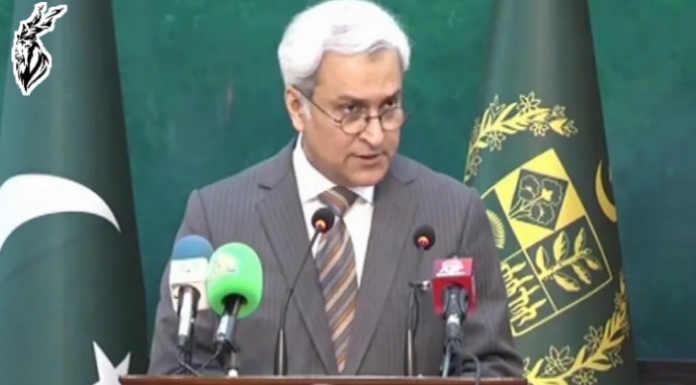
Speaking at a weekly press briefing, Foreign Office spokesperson Tahir Hussain Andarabi said details of the upcoming talks remained confidential due to the sensitive nature of the negotiations.
“If such information were shared publicly, it would amount to a breach of trust,” he said, stressing that maintaining confidentiality was essential to the diplomatic process.
Andarabi added that the key point was both sides’ willingness to continue engagement. “The important thing is that dialogue continues,” he said, noting that details regarding delegations and participation were matters for the parties involved.
Reports of possible return to Islamabad
His remarks came after reports suggested that U.S. and Iranian negotiating teams might return to Islamabad later this week for a second round of talks. According to Reuters, several sources indicated Pakistan was coordinating with both sides on the timing of the next meeting.
Earlier, U.S. President Donald Trump said talks between Washington and Tehran could resume soon and suggested that Pakistan was the preferred venue for further discussions. White House later confirmed that Pakistan is going to most likely host the next round of talks.
The first round of talks in Islamabad — held shortly after a ceasefire announcement — marked the highest-level direct engagement between the two countries in more than a decade and their most senior contact since the Iranian Revolution.
The delegations were led by U.S. Vice President JD Vance and Iranian Parliament Speaker Mohammad Bagher Ghalibaf.
Complex negotiations
The negotiations, known as the “Islamabad Talks”, lasted nearly 21 hours and covered several contentious issues, including the status of the Strait of Hormuz, Iran’s nuclear programme and international sanctions imposed on Tehran.
Despite the lengthy discussions, the first round concluded without a formal agreement. However, Pakistani officials described the meeting as an important step in establishing direct communication channels between the two sides.
Andarabi said the talks had been conducted in a “serious and constructive” manner, describing the outcome as neither a breakthrough nor a failure.
“There was neither a breakthrough nor a breakdown,” he said, noting that negotiations extended for more than 24 hours overall when preparatory discussions were included.
He added that the prolonged engagement demonstrated the seriousness and commitment of both parties.
Pakistan’s mediation efforts
The spokesperson said Pakistan would continue acting as a mediator and facilitator, keeping communication channels open between Tehran and Washington.
“All diplomatic efforts, including the Islamabad talks, are part of an ongoing process,” he said, adding that further high-level engagements and visits were also being planned.
He noted that Islamabad had engaged with international partners through diplomatic contacts ahead of the talks and would continue consultations with friendly countries, including Russia.
Andarabi also highlighted Pakistan’s broader diplomatic activity, including participation in the Shanghai Cooperation Organisation’s Regional Anti-Terrorist Structure and hosting officials from Saudi Arabia, Turkey and Egypt in Islamabad.
He further confirmed that Pakistan’s army chief, Asim Munir, was currently in Iran as part of ongoing diplomatic engagements.
Lebanon situation linked to regional peace
Addressing the wider regional situation, Andarabi condemned Israeli attacks in Lebanon and called for an immediate halt to hostilities.
He said the situation in Lebanon and the ceasefire there were being considered within the broader framework of the regional peace process.
According to the spokesperson, recent signs of de-escalation along the Israel-Lebanon front were encouraging and could help create conditions conducive to further dialogue.
The broader conflict began after joint U.S.-Israeli strikes on Iran on February 28, which triggered escalating hostilities across the region.
Subsequently, Hezbollah launched attacks in support of Tehran, prompting Israeli military operations in Lebanon that have resulted in thousands of casualties and mass displacement, according to Lebanese authorities.
Iran has insisted that Israel’s campaign against Hezbollah should be addressed as part of any agreement to end the wider Middle East conflict, while Washington has argued that the two issues should be treated separately.