
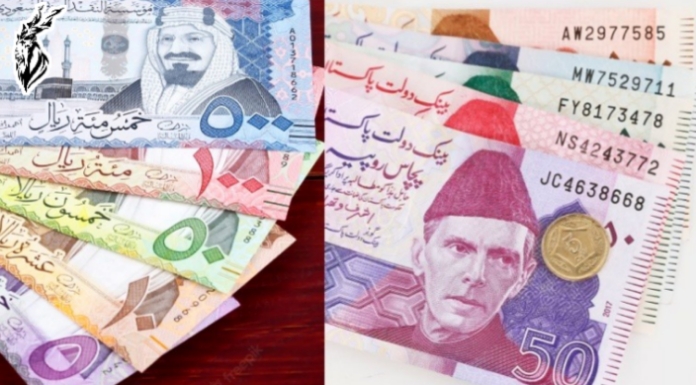

KARACHI: The Saudi Riyal (SAR) traded at Rs74.34 against the Pakistani Rupee (PKR) in Wednesday’s open market, marking a modest 8-paisa decline and extending one of the longest periods of sustained low volatility in recent currency history. According to currency dealers in Karachi, the selling rate settled around Rs74.91, with the pair remaining firmly confined to an exceptionally narrow trading channel that began in early January 2026—now stretching beyond twelve weeks of remarkably compressed price movement.
Today’s exchange rate continues to sit significantly below the 2025 mid-year peak of Rs76.03 recorded in July and hovers near the softer territory last consistently observed in late October 2025. The SAR-PKR pair’s unusual stability comes despite ongoing economic pressures, with analysts noting that a decisive break from this range would likely require meaningful shifts in global dollar strength, oil prices, or Pakistan’s domestic reserve dynamics.
The Saudi Riyal serves as the single most important monthly income source for millions of Pakistani households, with workers in Saudi Arabia’s construction, healthcare, hospitality, and domestic sectors maintaining what has become a critical remittance corridor. Saudi Arabia retains its position as Pakistan’s top remittance-origin country, contributing $913.3 million in May 2025 alone—the largest single-country inflow. Cumulative remittances from July 2024 to May 2025 reached $34.9 billion, reflecting a strong 28.8% year-on-year increase.
At today’s rate of Rs74.34, every 1,000 Riyals sent home equals Rs74,340—representing a gradual but persistent decline from earlier 2025 levels. While still providing essential support for school fees, medical treatment, groceries, utility bills, and household needs, the ongoing weakness is putting mounting pressure on remittance-reliant families amid Pakistan’s persistent inflation. The State Bank of Pakistan continues to monitor these flows closely, as they directly impact foreign exchange reserves and monetary policy decisions.
The current exchange rate generates opposing economic forces: remittance-receiving households face slow but steady erosion in real purchasing power, while importers of Saudi crude oil, refined products, and petrochemicals enjoy lower costs in rupee terms. Pakistan’s trade balance gains modest indirect relief from cheaper imports, and the softer rupee helps keep Pakistani exports—including rice, textiles, leather, surgical instruments, and fresh produce—competitive on international markets.
The Saudi Riyal, subdivided into 100 halala, remains rigidly pegged to the US dollar at 3.75 SAR = 1 USD, managed by the Saudi Arabian Monetary Authority for maximum stability. The Pakistani Rupee operates under a managed float supervised by the State Bank of Pakistan, influenced by inflation, trade balance, and—most importantly—remittance volumes. With overseas Pakistani worker outflows remaining robust and seasonal drivers like Hajj/Umrah travel and fiscal year-end bonuses providing support, the remittance corridor is expected to stay one of Pakistan’s most dependable economic links, according to analysis from Reuters.
Foreign exchange reserves, which stood above $11 billion as of late 2024, continue to receive steady support from these inflows, helping the central bank manage inflation and external debt obligations. For now, the Riyal at Rs74.34 serves as a quiet but critical pillar for millions of households—though each paisa of erosion is felt more acutely with time, particularly as global economic uncertainties persist. The BBC has reported extensively on how remittance-dependent economies navigate currency fluctuations amid broader financial challenges.
Source: ARY News