
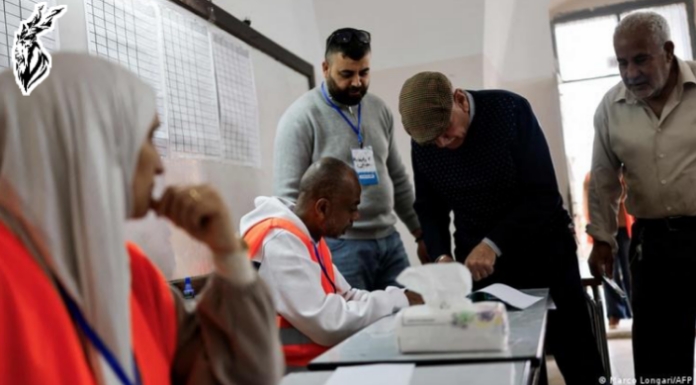

Palestinians in the West Bank and parts of Gaza headed to the polls on Saturday for municipal elections, the first vote since the devastating Gaza war that began in October 2023. Nearly 1.5 million registered voters in the Israeli-occupied West Bank and 70,000 in Gaza’s Deir el-Balah area cast ballots, according to the Ramallah-based Central Elections Commission.
Polling stations opened at 7 a.m. local time, with election officials overseeing the process in both regions. The elections are dominated by lists aligned with President Mahmoud Abbas’s Fatah party or independent candidates. Notably, no lists affiliated with Hamas, which controls nearly half of Gaza, are participating. In most cities, Fatah-backed tickets face independent lists led by factions such as the Popular Front for the Liberation of Palestine.
Voters expressed a mix of hope and disillusionment. Khalid Eid, 55, who voted in Al-Bireh, said: ‘We must see change every four years through elections. We can’t change the situation but we hope to replace people who might be better and help develop the community.’ Others, like businessman Mahmud Bader from Tulkarem, voiced skepticism: ‘Whether candidates are independent or partisan, it has no effect… The occupation is the one that rules Tulkarem.’
Municipal councils manage basic services like water, sanitation, and local infrastructure, but the Palestinian Authority faces widespread criticism over corruption and stagnation. With national elections frozen since 2006, these local polls are seen as a rare democratic exercise. UN coordinator Ramiz Alakbarov praised the elections as ‘an important opportunity for Palestinians to exercise their democratic rights during an exceptionally challenging period.’
In Gaza, the vote is limited to Deir el-Balah, chosen because its population largely remained despite the war that has killed more than 72,000 people and devastated infrastructure. Political scientist Jamal al-Fadi of Cairo’s Al-Azhar University called it ‘an experiment to test success or failure, since there are no post-war opinion polls.’ Polling stations in the West Bank close at 7 p.m., while Gaza’s close at 5 p.m. due to electricity shortages. The elections are a crucial test for local governance amid widespread skepticism and a shattered political landscape.
Source: ARY News