
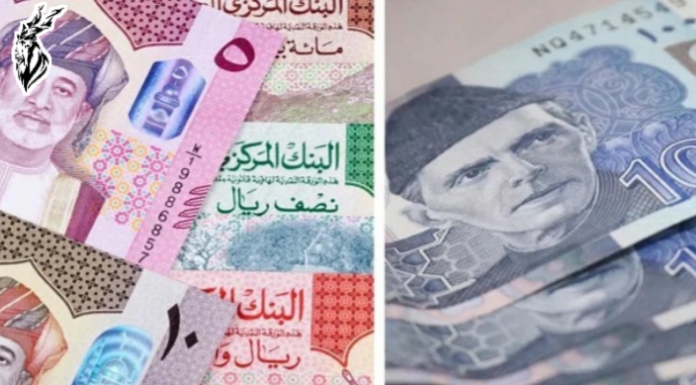

The Omani Riyal (OMR) to Pakistani Rupee (PKR) exchange rate in the open market on May 14, 2026, stands at approximately Rs.722.00–724.00 for buying and Rs.732.79 for selling, remaining largely stable amid steady oil prices and robust remittance inflows.
The Omani Riyal, pegged to the US dollar at 2.6008 since 1986, derives its strength from Oman’s oil-driven economy. In contrast, the Pakistani Rupee operates as a floating currency managed by the State Bank of Pakistan, influenced by domestic inflation, remittances, and global economic conditions. This week, the OMR/PKR pair has shown minor fluctuations, closing near Rs.723.85, with the riyal’s value closely tracking Brent crude prices, which remain firm in recent sessions.
For the Pakistani rupee, strong remittance inflows—recently around $3.8 billion monthly—continue to provide solid support, while inflation stays at moderate levels. Because the OMR is dollar-pegged, developments in the US economy directly impact the pair. The current rate is trading slightly below longer-term averages, suggesting room for gradual movements tied to energy prices and remittance flows.
These exchange rates have tangible effects on daily life. A Pakistani worker in Muscat earning 500 OMR would now send home approximately Rs.361,925, offering consistent value for families covering living costs and essentials like rice. Bilateral trade between Oman and Pakistan, which ranges between $1–1.2 billion annually—with Pakistan exporting textiles and rice while importing energy products—also reflects these currency movements. A relatively softer riyal can make Omani imports more affordable for Pakistan and offer minor advantages to exporters. Travelers will find that 1,000 PKR buys about 1.38 OMR for trips to Muscat, with little change in recent weeks.
Looking ahead, analysts expect the OMR/PKR rate to remain range-bound in the near term, driven by global oil trends and Pakistan’s remittance inflows. Any significant shift in OPEC+ output policies or a sharp change in US monetary policy could introduce volatility, but current fundamentals point to continued stability.
Source: ARY News