
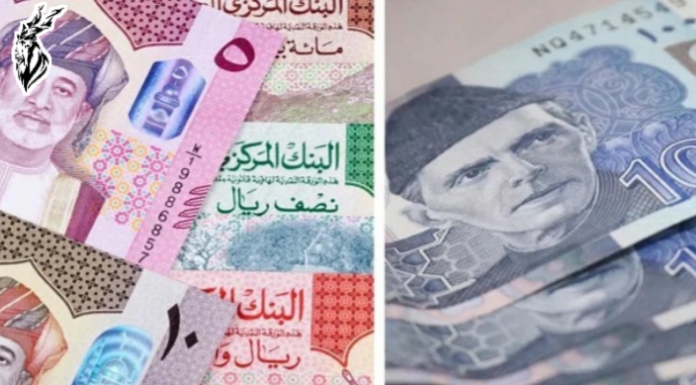

The Omani Riyal (OMR) remained largely stable against the Pakistani Rupee (PKR) in Pakistan’s open market on May 15, 2026, with minor gains from the previous day. According to currency dealers, the buying rate edged up from Rs. 722.00 to Rs. 722.05, while the selling rate rose slightly from Rs. 732.79 to Rs. 732.85. The marginal increase reflects steady demand for the Omani currency, driven by remittance inflows and trade transactions.
The OMR’s value is closely tied to global oil prices, as Oman is a major oil exporter. Brent crude has remained relatively stable in recent sessions, supporting the currency’s peg to the US dollar. For the PKR, sustained remittance inflows — averaging around $3.8 billion monthly — continue to provide crucial support. Pakistan’s inflation has also moderated, helping to stabilize the exchange rate. Because the OMR is pegged to the US dollar, economic developments in the United States, such as Federal Reserve interest rate decisions, directly influence its value against the rupee. Analysts note that the current rate is trading slightly below longer-term averages, suggesting potential for gradual adjustments based on energy prices and remittance trends.
These exchange rate movements have tangible effects on everyday life. For instance, a Pakistani worker in Muscat earning 500 OMR would now remit approximately 361,925 PKR, up from 361,000 PKR a day earlier. This stability helps maintain consistent remittance value, supporting household expenses and essential commodities like rice. Trade between Oman and Pakistan — valued at roughly $11.2 billion annually — also reflects these currency dynamics. Pakistan exports textiles and rice to Oman, while importing energy-related products. A relatively weaker OMR can make Omani imports slightly more affordable for Pakistan while offering modest benefits to exporters. For travelers, the rate remains fairly stable, with 1,000 PKR converting to about 1.38 OMR for trips to Muscat. Currency experts advise monitoring global oil prices, US economic indicators, and regional remittance flows for future rate changes.
The slight uptick in the OMR rate underscores the resilience of the Pakistani rupee amid global economic headwinds, though sustained stability will depend on macroeconomic fundamentals and external sector performance.
Source: ARY News