
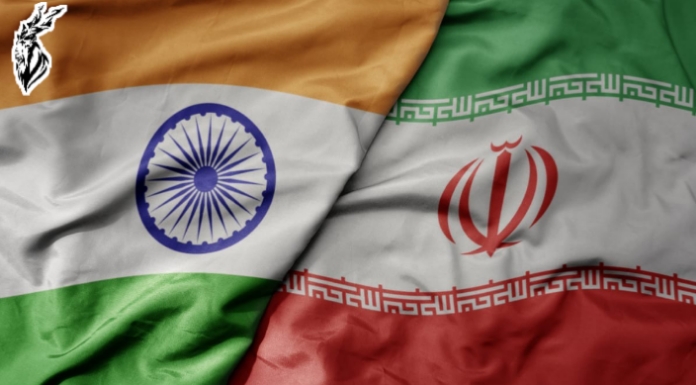

“A friend in need is a friend indeed,” goes the old saying — and few recent episodes in South Asian diplomacy have tested that maxim as starkly as India’s conduct during the Iran war.
For years, New Delhi cultivated the image of Tehran’s dependable partner. Chabahar port was showcased as proof of an enduring strategic bond, and Indian officials spoke often of civilizational ties stretching back centuries. But when Iran found itself under direct attack from the United States and Israel earlier this year, that carefully cultivated image collapsed under the weight of India’s actions.
Just two days before the joint US-Israel strikes began on February 28, Prime Minister Narendra Modi was in Tel Aviv, embracing Benjamin Netanyahu and elevating ties between the two countries to a “Special Strategic Partnership.” He accepted a Knesset medal, announced more than two dozen bilateral agreements, and told Israeli lawmakers that India stood with Israel “firmly, with full conviction.” The timing was not lost on observers — Bloomberg and other outlets reported that opposition figures in India, including Congress spokesman Jairam Ramesh, called the visit’s optics a “betrayal of India’s values, principles, concerns, and interests.” Whether or not Modi was briefed in advance on the coming strikes remains disputed, but the symbolism of the visit — and India’s subsequent refusal to condemn the attack on Iran’s leadership — was unmistakable.
Compounding matters, an Iranian naval vessel came under attack while operating in Indian waters during this period, and New Delhi’s response was widely seen as evasive: officials were slow to clarify the circumstances and avoided any condemnation of the US or Israel, instead noting only that the ship’s official invitation had technically expired. For a country that has long presented itself as a guarantor of security in the Indian Ocean, the silence spoke volumes.
Contrast this with Pakistan’s conduct. Islamabad faced its own considerable pressures but chose to stand publicly with Iran throughout the conflict, and its diplomats were credited with helping broker the ceasefire and the memorandum of understanding that has since underpinned the fragile peace process. That record of engagement is reflected in the composition of delegations sent to Ayatollah Khamenei’s funeral this month: Pakistan dispatched Prime Minister Shehbaz Sharif himself, along with senior military and political leadership. India, by contrast, sent a delegation led by the Governor of Bihar and a junior minister of state — a lower-tier representation that many in the region have read as a signal of where India’s true priorities lie.
None of this is to say India’s calculus is inexplicable. New Delhi has real interests in its relationship with Israel and the United States, including on defense technology and trade, and no country’s foreign policy is built on sentiment alone. India’s government would likely argue — and has argued, through officials like External Affairs Minister S. Jaishankar — that “strategic autonomy” means engaging all sides without being forced into binary camps, and that its restraint reflects caution rather than betrayal.
But caution and abandonment can look very similar from Tehran’s vantage point. When a professed partner declines to condemn an assassination, stays silent after an attack on its own naval guest, and sends its head of government to embrace the other side’s leadership days before the bombs fall, the language of “civilizational friendship” starts to ring hollow. Iran, and the wider region, will draw their own conclusions about which partnerships were real — and which were merely transactional.