
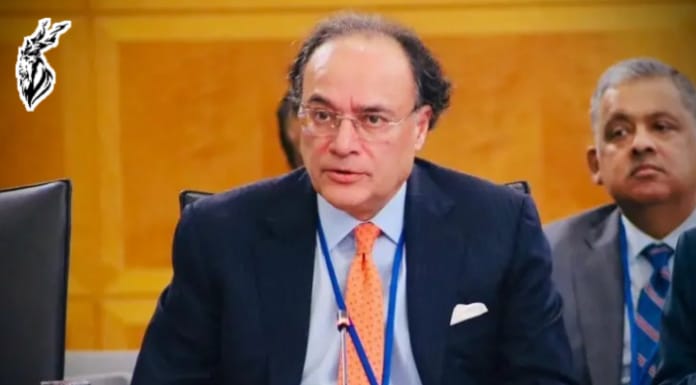

Finance Minister Muhammad Aurangzeb has warned that protests and sit-ins could cause economic losses of around Rs120 billion per day, citing research by the Planning Commission.
Aurangzeb issued the warning in a recorded televised message on Sunday, ahead of the PTI’s planned protest march towards Islamabad on September 27.
The PTI has announced nationwide protests to demand the release of party founder Imran Khan and call for the supremacy of the Constitution. The government has said it will stop the planned march.
The Jamaat-i-Islami also began its march towards Islamabad on Sunday to press the government to withdraw the fuel levy.
Aurangzeb said protests and sit-ins would amount to “self-inflicted pain” amid economic pressures linked to the ongoing conflict in the Middle East.
He said tensions in the region had disrupted supply chains and increased freight and insurance costs. He also referred to the recent bombing in Kohat and a renewed wave of terrorism in the country.
The minister said the government had consulted the economic wing of the Planning Commission to assess the impact of protests and sit-ins on economic activity.
He said the commission had estimated that proposed protests could cause daily losses of Rs120 billion based on its research.
According to Aurangzeb, the services sector would face the largest impact, with an estimated loss of Rs86 billion. This includes financial services, communications, retail, transportation, wholesale and hospitality.
The industrial sector could suffer losses of Rs25 billion, including impacts on construction, finished goods, raw materials and supply chains.
The agriculture sector was estimated to face losses of Rs9 billion.
Aurangzeb also estimated that the government could face an additional revenue loss of Rs17 billion if the protests go ahead.
He said previous protests and sit-ins had also placed a significant burden on the national treasury due to additional spending on logistics, transportation, fuel and security deployments.
The finance minister also highlighted the government’s focus on export-led growth, saying the export target for the current fiscal year was $35.9 billion, with six per cent growth expected.
“We have been on trajectory for the first two months,” he said.
Aurangzeb recalled a strike in December 2025, saying it took about one and a half months for the economy to recover from the resulting losses.
He also referred to a similar disruption in August and warned that such events could hurt the country’s growth trajectory, particularly amid instability around the Middle East and the Hormuz and Bab al-Mandab waterways.