
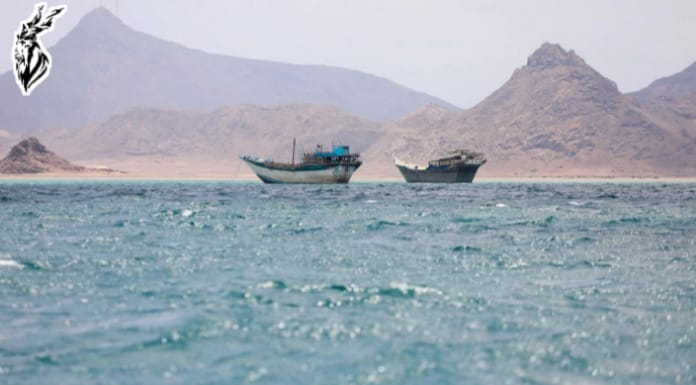

The ongoing Yemen war presents a paradox. A country that has endured severe humanitarian crisis for years lies beside the strategically important maritime trade route “The Bab al Mandab Strait”. The Strait of Bab al Mandab links the Red Sea with the Gulf of Aden. It provides a gateway to the ships travelling towards Suez Canal. Approximately 10% to 12% of global maritime trade passes through Bab al Mandab. If the maritime traffic can not safely pass through Bab al Mandab, the direct maritime route through the Red Sea towards the Suez Canal becomes less viable and the ships have to pass through a costly route around Africa’s cape of good hope. Therefore, instability in Yemen resonates far beyond the African peninsula having immense impact on global shipping and trade security. Yet Yemens strategic location and geography that makes it internationally vital has not contributed to the security and prosperity of its own people. The paradox raises a question in international relations: How can an actor influence the international community without securing peace at home?
Yemen war can not be regarded simply as an outcome of regional power politics between Saudi Arabia and Iran. It grew gradually from deep seated grievances, weak governance and institutions, economic hardships and a controversial political transition after President Ali Abdullah Saleh left the office in 2012. The Houthi movement expanded rapidly and took control of Sanaa in 2014, weakening the authority of an internationally recognised government. In 2015, a Saudi-led coalition intervened to restore the government. While Iran supported the Houthis making it a part of regional rivalry. Although Saudi Arabia and Iran contested for power in Yemen, regarding Yemen only as a proxy war overlooks the underlying grievances and internal divisions in the society. External involvement worsened the conflict but did not create every grievance.
The conflict remains relevant in 2026, as the Reuters reported that the renewed fighting around the Taiz has further deteriorated the already fragile security situation in Yemen. Taiz is a city in Yemen that is strategically important for access to Aden and the Bab al Mandab Strait. The Houthis ability to threaten global maritime trade has internationalised the conflict, linking Yemen’s internal security situation with the global shipping lanes security and regional power competition.
Yemen shows how geography can contribute to asymmetric warfare. An actor does not necessarily need conventional navy or military strength to overpower a stronger state if it sits beside an important maritime chokepoint. It can easily exploit a narrow maritime chokepoint which affects many others. Threats and Attacks on the Red Sea route force the maritime traffic to reroute increasing insurance costs and delay in deliveries. These consequences draw international attention to the conflict that might otherwise remain unaddressed. This choke point leverage gives the conflict unavoidable international significance while also exposing the limits of military superiority. The stronger state may strike the targets successfully and secure some of the shipping routes, but it cannot dismantle the political networks, address local grievances, and remove the strategic incentives that fuel insecurity. Tactical success does not necessarily eliminate the underlying threats that sustains the conflict.
However, the international attention to the maritime trade disruptions must not be confused with resolving the Yemen’s war. When maritime chokepoints are disrupted, consequences are measured in freight rates, disruption in global supply chains and insurance premiums. Despite being fundamental to the country’s future, Yemeni civilian’s sufferings are less likely to attract the international attention as much as the economic impacts do. The United Nations 2026 Humanitarian planning provided an estimate of about more than 22 million people in need of humanitarian aid and protection in Yemen. The scale of need demonstrates a significant gap between geopolitical relevance and human security. Foreign powers may prioritise curtailing threats on shipping routes, while ordinary Yemeni citizens continue to face hunger, displacement, economic collapse, and dire humanitarian crisis. Security policies designed to counter shipping threats are incomplete without viable political settlements and institutional reforms.
The situation in Yemen requires more than military force and temporary reduction of attacks. A sustainable solution asks for a more Yemeni inclusive approach, addressing political vacuum, governance issues, and local grievances. Any ceasefire must go beyond securing maritime security in the Bab al Mandab Strait; it must also tackle the underlying political causes which drives the conflict. The international community must give human security same priority as the maritime security. Being at the crossroads of Bab al Mandab gives Yemen considerable strategic significance but this significance does not necessarily translate into peace and public welfare. However, protecting shipping routes and achieving peace inside Yemen are different challenges that require an integrated response.