
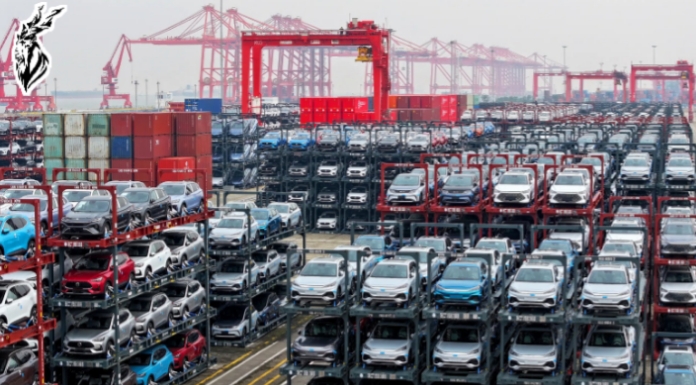

China’s automotive industry demonstrated remarkable resilience in March as vehicle exports surged 73.7% year-on-year despite significant shipping disruptions caused by the ongoing Middle East crisis. According to data released by the China Passenger Car Association, exports reached nearly 700,000 vehicles last month, accelerating from the 54.1% growth recorded in the first two months of 2026.
“Car exports have entered a stage of super high growth, beating our expectations,” stated Cui Dongshu, the association’s secretary-general. This export boom comes as the Middle East conflict has created logistical challenges for one of China’s key overseas automotive markets, forcing manufacturers to adapt shipping routes and supply chains to maintain delivery timelines.
The export surge contrasts sharply with China’s domestic market performance, where sales declined 15.2% year-on-year to 1.67 million vehicles in March. This marks the sixth consecutive month of falling domestic sales, driven by multiple factors including rising fuel prices that have dampened demand for conventional vehicles and reduced incentives for electric vehicles amid China’s sputtering economic recovery.
Combustion engine car sales dropped 15.7% in March, accelerating from the 13.4% decline recorded in January-February. While China has capped domestic fuel price increases to mitigate the impact of surging global oil prices linked to the Middle East conflict, consumer sentiment remains cautious. Dealers continue to face pressure from bloated inventories, with tracking indices showing increased unsold vehicles last month.
The electric vehicle sector faces particular challenges domestically, with sales of EVs and plug-in hybrids slipping 14.4% year-on-year in March. Reduced incentives, including the end of purchase tax exemptions, have cooled consumer enthusiasm for new EV purchases. Even industry leader BYD posted its seventh consecutive monthly sales decline in China, despite maintaining strong growth in overseas markets like Europe where fuel price hikes are driving EV demand.
BYD executives remain optimistic about their international prospects, projecting the company will sell more than 1.5 million vehicles overseas this year. This confidence reflects broader industry trends as Chinese automakers increasingly look to international markets for growth. The export acceleration comes despite significant challenges in key regions, demonstrating the global competitiveness China has developed in automotive manufacturing, particularly in the electric vehicle segment.
Industry analysts note that China’s automotive sector is undergoing a fundamental transformation, with domestic market saturation pushing manufacturers to prioritize international expansion. The March export figures suggest Chinese automakers are successfully navigating geopolitical tensions and supply chain disruptions while capitalizing on growing global demand for affordable electric vehicles. As noted by the BBC’s automotive analysts, this export growth positions China to potentially overtake traditional automotive powerhouses in key international markets within the coming years.
Source: ARY News