
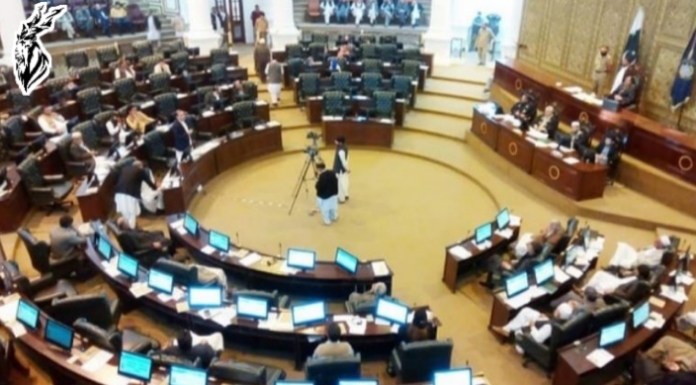

PESHAWAR: The Khyber Pakhtunkhwa (KP) Assembly has introduced a new bill aimed at curbing begging across the province, proposing strict penalties for individuals and networks involved in the practice.
The proposed Vagrancy Act 2026 seeks to eliminate professional begging through a province-wide framework. It includes the formation of a high-level steering committee tasked with overseeing enforcement and shaping policy measures.
Under the draft law, authorities would be empowered to take action against organized begging rings. The committee would also have the authority to block national identity cards and passports of repeat offenders. First-time offenders could face up to one month in prison, while those repeatedly involved in begging may be jailed for up to one year.
The bill outlines tougher punishments for more serious violations. Individuals engaged in deceptive or fraudulent begging could face up to two years in prison, while those operating organized networks may receive sentences of up to three years. Additionally, anyone found forcing children into begging could be fined as much as Rs400,000.
Law enforcement agencies and social welfare officials would be granted powers to arrest suspected professional beggars without a warrant. However, detainees must be presented before a special magistrate within 24 hours of arrest.
The legislation also emphasizes rehabilitation, allowing courts to send offenders to dedicated centers instead of prison. These facilities would offer vocational training and psychological support to help individuals reintegrate into society. Children found begging would be placed under the care of child protection units.
To strengthen enforcement, the bill proposes the use of biometric tracking and modern monitoring systems. Begging in public spaces would be classified as a punishable offense, and those facilitating such activities would also face legal consequences.
The steering committee is expected to review the implementation of the law every three months to ensure its effectiveness and make necessary adjustments.