
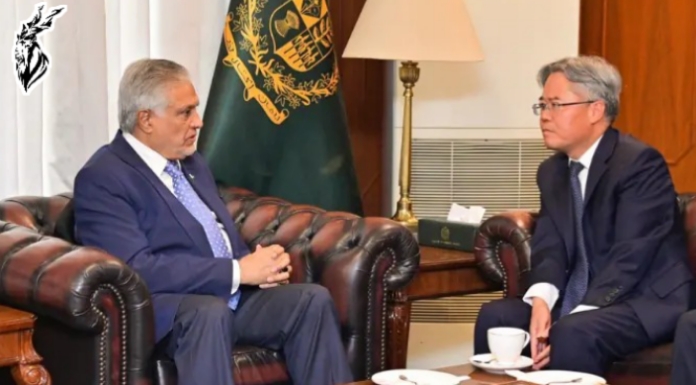

China has formally endorsed Pakistan’s diplomatic efforts to mediate between the United States and Iran, providing crucial international backing as regional tensions escalate in the Gulf. The endorsement came during a high-level meeting in Islamabad between Chinese Ambassador Jiang Zaidong and Pakistan’s Deputy Prime Minister Ishaq Dar, where both officials discussed pressing regional developments and reaffirmed their nations’ strategic partnership.
Ambassador Zaidong conveyed Beijing’s “full support for and appreciation of Pakistan’s continued efforts to facilitate engagement between the U.S and Iran for sustained peace and stability in the region and beyond.” This diplomatic backing arrives at a critical juncture, with a fragile ceasefire agreement between Washington and Tehran facing new challenges. The United States recently implemented a naval blockade around Iranian ports in the Gulf, a move that China has condemned as “dangerous and irresponsible.”
The blockade, ordered by U.S. President Donald Trump, took effect despite a previously agreed two-week ceasefire. Chinese foreign ministry spokesman Guo Jiakun warned that increased U.S. military deployments and targeted blockade actions “will only exacerbate tensions and undermine the already fragile ceasefire agreement and further jeopardise safety of passage through the Strait of Hormuz.” This strategic waterway is crucial for global oil shipments, with approximately 20-30% of the world’s oil passing through it.
Deputy Prime Minister Dar used the meeting to reaffirm the Pakistan-China All-Weather Strategic Cooperative Partnership, emphasizing the strength of bilateral ties and the importance of sustained high-level exchanges. Pakistan has positioned itself as a potential mediator in the conflict, leveraging its diplomatic relationships with both nations. Islamabad maintains historical ties with Washington while also sharing a border with Iran and maintaining cooperative relations.
The timing of China’s endorsement is particularly significant given the approaching deadline for the ceasefire agreement. As regional observers note, Pakistan’s mediation efforts represent a rare diplomatic opening in a conflict that has seen escalating military posturing. The combined pressure from China’s endorsement and Pakistan’s diplomatic engagement may create additional leverage for peaceful resolution as stakeholders navigate complex geopolitical calculations.
China’s public support for Pakistan’s mediation role underscores Beijing’s growing diplomatic influence in South Asia and the Middle East. This development occurs against the backdrop of broader strategic competition between China and the United States, with Pakistan positioned at the intersection of multiple geopolitical currents. The outcome of these diplomatic efforts could significantly impact regional stability and global energy security in the coming weeks.
Source: ARY News