
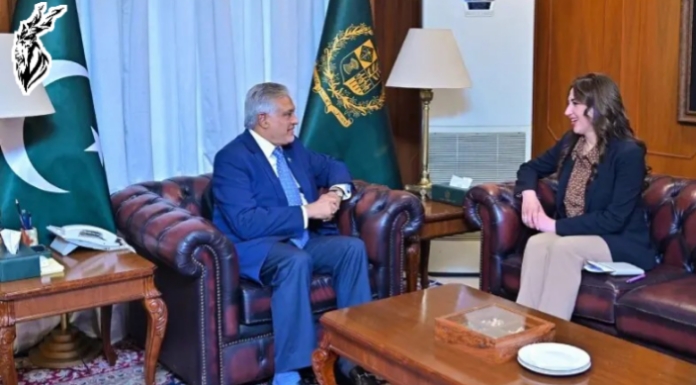

ISLAMABAD: Pakistan has urged both the United States and Iran to extend their ongoing ceasefire and prioritize diplomacy, as tensions in the Middle East remain high.
Deputy Prime Minister and Foreign Minister Ishaq Dar made the appeal during a meeting with US Chargé d’Affaires Natalie Baker, according to a statement from the Foreign Office. He emphasized that dialogue remains the only sustainable path toward regional peace and stability.
Dar reiterated Pakistan’s position that both Washington and Tehran should continue engagement and avoid escalation. In response, Baker acknowledged Pakistan’s constructive role in facilitating communication and supporting peace efforts in the region.
Meanwhile, US President Donald Trump expressed confidence in securing a favorable agreement with Iran but signaled reluctance to prolong the ceasefire. In remarks to media, he warned that military action could resume if negotiations fail, adding that US forces remain prepared.
The fragile truce between the two sides, initially set to expire on April 21, has been extended briefly, though uncertainty remains over its future. Trump also accused Iran of repeatedly violating the ceasefire terms.
The developments come as Islamabad is expected to host a potential second round of talks between US and Iranian officials. Earlier discussions held on April 11–12 ended without a formal agreement but did not collapse, with Pakistan playing a key mediating role.
Although reports suggest a US delegation may arrive soon, there has been no official confirmation from Tehran regarding its participation. Iranian officials have voiced skepticism over Washington’s intentions, citing what they describe as inconsistent messaging and alleged ceasefire violations.
Iranian President Masoud Pezeshkian criticized recent US actions as “contradictory,” while the foreign ministry accused Washington of undermining diplomacy through military and economic measures, including a naval blockade and attacks on Iranian assets.
Tensions have further intensified following the seizure of an Iranian cargo vessel in the Gulf of Oman by US forces. While Washington described the move as enforcement of sanctions, Tehran condemned it as piracy and responded with increased military activity near the strategically vital Strait of Hormuz.
Key sticking points in the standoff include freedom of navigation in the strait and US demands for long-term restrictions on Iran’s nuclear programme.