
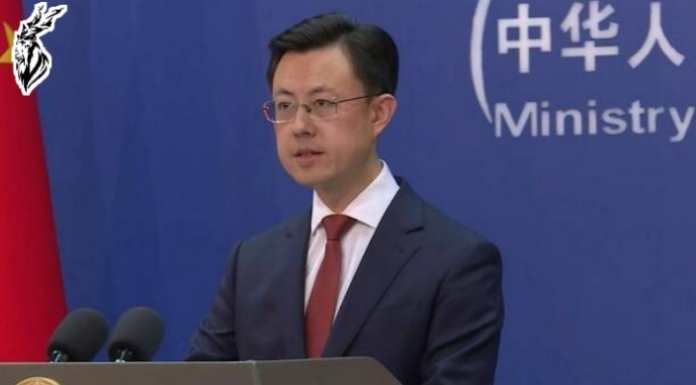

BEIJING — China warned on Wednesday that the situation in the Middle East was at a “critical juncture” after US President Donald Trump extended a ceasefire to allow Iran more time for negotiations, but maintained a naval blockade of Iranian ports.
“The current regional situation stands at a critical juncture transitioning between war and peace; the paramount priority remains to make every effort to prevent a resumption of hostilities,” Chinese foreign ministry spokesman Guo Jiakun told a news briefing.
Trump indefinitely pushed back the end of the two-week truce on Tuesday, with Tehran yet to respond to US terms. However, he said a US blockade of Iran’s ports would continue, keeping economic pressure on the Islamic Republic. The original ceasefire, brokered by regional mediators, had been set to expire later this week.
Guo did not comment directly on the ceasefire extension when asked by reporters, adding only that Beijing would “continue to play a constructive role” in promoting peace and stability in the region. China has historically advocated for dialogue and opposed unilateral sanctions, while maintaining economic ties with both Iran and Gulf Arab states.
The US blockade, which restricts Iranian oil exports through naval interdiction, has been a key point of contention. Iran has called for the blockade to be lifted as a precondition for negotiations, while Washington insists it is necessary to prevent Tehran from developing nuclear weapons. The standoff has raised fears of a wider conflict, with Iran-backed groups in Yemen, Lebanon, and Syria already engaged in hostilities.
Analysts say the extension offers a narrow window for diplomacy, but the continued blockade could undermine talks. “Without concrete steps to ease economic pressure, Tehran may see little incentive to engage seriously,” said a Middle East expert at the Reuters news agency. The United Nations has urged both sides to seize the opportunity, warning that any relapse into fighting could destabilize the entire region.
China’s warning comes as it seeks to position itself as a neutral mediator, having previously hosted talks between Saudi Arabia and Iran that led to a detente in 2023. Beijing has also increased its diplomatic engagement with Middle Eastern capitals in recent months, seeking to protect its energy interests and Belt and Road investments.
“The international community must work together to prevent the region from sliding back into conflict,” Guo said, urging all parties to exercise restraint and pursue a political settlement. For more background, see Wikipedia’s Middle East overview and Al Jazeera’s Iran coverage.
Source: ARY News