
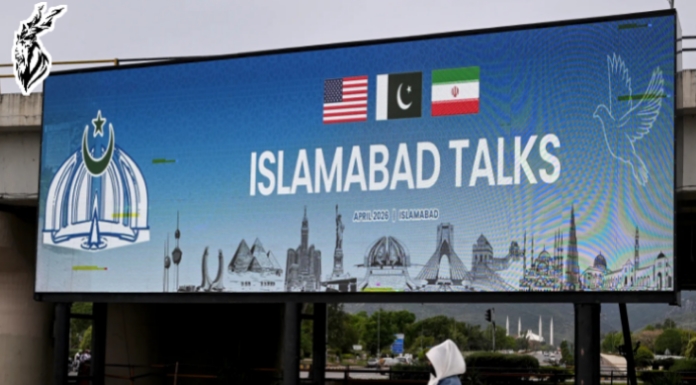

WASHINGTON: The next round of in-person talks between the United States and Iran will likely be held in Pakistan, White House press secretary Karoline Leavitt said Wednesday, underscoring Islamabad’s growing role as a diplomatic intermediary in one of the region’s most sensitive negotiations.
Speaking at a press briefing, Leavitt indicated that while a second meeting has not yet been formally scheduled, efforts to arrange it are productive and ongoing. She suggested the talks would very likely be in the same place as they were last time, pointing to Pakistan as the expected venue. Leavitt emphasized that Pakistan has played a central role in facilitating dialogue between Washington and Tehran.
“The Pakistanis have been incredible mediators throughout this process,” she said. “They are the only mediator in this negotiation.” She added that despite interest from other countries, the administration of Donald Trump prefers to streamline communication through Islamabad.
The White House also pushed back on reports that the United States has formally requested an extension of the current two-week ceasefire with Iran, which is set to expire on April 21. Leavitt said no such request has been made. However, she noted that discussions with Iran have continued even after the United States abruptly left the first in-person meeting over the weekend, describing the ongoing contacts as constructive.
Addressing separate reports about China allegedly supplying weapons to Iran, Leavitt said Chinese President Xi Jinping had assured President Trump that such claims were untrue. She added that Washington is taking Beijing at its word, as it has in similar past situations involving other countries.
The developments come amid heightened diplomatic efforts to sustain dialogue and avoid further escalation, with Pakistan emerging as a key intermediary. The strategically located nation has historically played a mediating role in regional conflicts, leveraging its ties with both the United States and Iran. The US-Iran tensions have been a focal point of global diplomacy, with any progress seen as crucial for stability in the Middle East and South Asia.
Observers note that hosting the talks would bolster Pakistan’s diplomatic standing and potentially strengthen its relationship with Washington. The next round of negotiations is expected to address key sticking points, including Iran’s nuclear program and regional security issues.
The White House’s endorsement of Pakistan as a mediator highlights Islamabad’s unique position as a bridge between East and West. With the ceasefire deadline approaching, all eyes are on Pakistan’s ability to facilitate a breakthrough.
Source: ARY News