
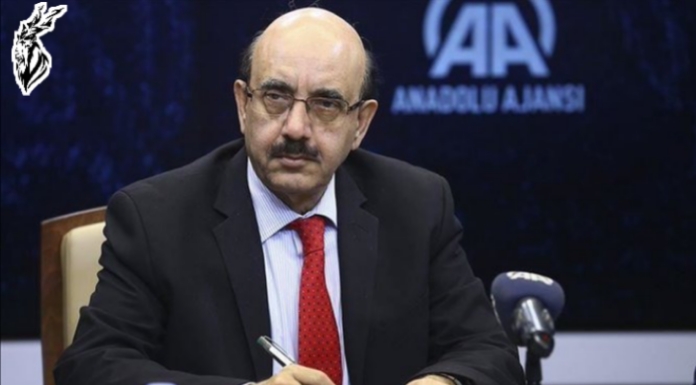

ISLAMABAD: Former Ambassador of Pakistan to the United States, China, and the United Nations, and former President of Azad Jammu and Kashmir, Sardar Masood Khan, said on Friday that Pakistan has emerged as a principal global mediator after successfully earning the trust of both Washington and Tehran.
Speaking to ARY News, Sardar Masood said Pakistan demonstrated remarkable political and diplomatic wisdom by helping bridge differences between the United States and Iran, which had remained at odds for nearly 47 years. At a time when much of the world had lost hope, Pakistan maintained active engagement with both Washington and Tehran, helping create the consensus that ultimately led to a ceasefire, he said.
Khan noted that Pakistan’s success in facilitating dialogue reflects a rare diplomatic achievement built on long-standing relationships, careful balancing of regional interests, and sustained engagement with multiple stakeholders. He said Pakistan’s credibility was reinforced by its ability to maintain trust simultaneously in Washington, Tehran, and key Gulf capitals, while avoiding alignment with any single bloc.
According to Khan, Pakistan did not act alone but worked in close coordination with regional partners, including Saudi Arabia, Qatar, Turkey, Egypt, and China, while also receiving broader international support from countries across Europe, Asia, and other regions. This collective backing transformed the initiative into a global diplomatic endeavour rather than a unilateral mediation effort, he said.
Khan observed that the early phase of the agreement has already generated positive signals for global markets, including easing energy prices and improving investor sentiment. He added that the expected reopening of the Strait of Hormuz and the restoration of key communication and economic channels would further reduce geopolitical tensions, stabilize global markets, and strengthen confidence in international supply chains. He also expressed optimism that Pakistan’s economic indicators would improve as regional stability contributes to a more favorable economic environment.
Describing the development as a win-win situation, Khan said the agreement could benefit both the region and the wider international community. However, he cautioned that significant challenges remain. He pointed to the possibility of renewed Israeli military actions in Lebanon and uncertainties surrounding domestic political support for the agreement in both Iran and the United States. The real challenge begins with the upcoming 60-day negotiation phase, during which complex technical and political issues must be resolved, he said, warning that obstacles could emerge at any stage of the process.
Despite these challenges, Khan maintained that Pakistan’s role in facilitating dialogue has firmly established the country as a credible and influential diplomatic actor on the global stage. The successful mediation underscores Pakistan’s growing stature as a peace broker, particularly in the volatile Middle East region, where recent tensions had threatened wider conflict.
Analysts note that Pakistan’s ability to engage with both sides stems from its longstanding ties with the United States and non-aligned position in regional disputes. As the peace process moves forward, all eyes will be on the crucial 60-day negotiation period, which will test the durability of the ceasefire and the viability of a comprehensive agreement.
Source: ARY News