
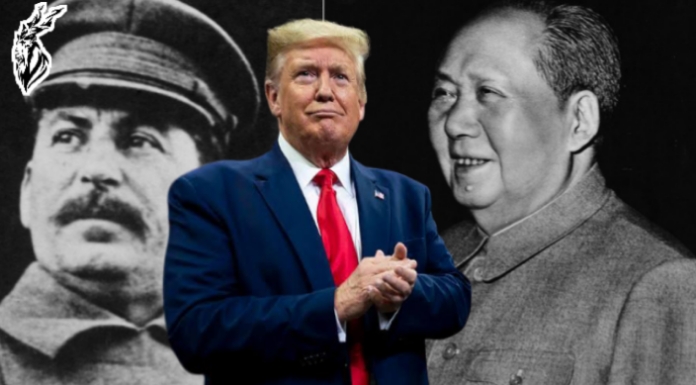

A forthcoming book by New York Times journalists Maggie Haberman and Jonathan Swan offers a revealing look into President Donald Trump’s second term, including an episode in which Trump compared the scope of his authority to some of history’s most notorious rulers.
According to Regime Change, set for release next week, Trump showed the authors a document during an interview in March that argued he possessed greater power than figures such as Attila the Hun, Genghis Khan, Napoleon Bonaparte, Joseph Stalin, Mao Zedong and Adolf Hitler.
The discussion arose when Haberman and Swan questioned Trump about the influence he wielded during his second term and how he viewed his place in history. In response, Trump recounted receiving a two-page assessment from a man he described as a historian during an event honoring legendary golfer Gary Player.
Trump reportedly asked an aide to retrieve the document and proudly shared it with the reporters. The text argued that while historical rulers exercised immense authority in their respective eras, their influence remained geographically limited, whereas the power of a modern U.S. president extended across the globe.
According to the authors, Trump read through the list of historical figures and emphasized that none matched the reach of his position as president of the United States. He also remarked that those leaders maintained control through fear, adding a rhetorical comment questioning who would govern in such a manner.
However, the book states that efforts to verify the identity of the document’s author revealed that he was not a historian. Instead, the individual was identified as Gary Player’s longtime caddie and close associate. The man reportedly told the authors that he had first discussed his views on Trump’s power with Player before later sharing them directly with Trump during a golf outing in Florida.
The episode gained renewed attention after Trump posted the document on his Truth Social platform, describing its author as a “presidential historian.” The post appeared shortly before details from the book became public.
Regime Change paints a detailed portrait of Trump’s first 14 months back in office, depicting a presidency marked by expansive executive authority, unconventional decision-making and frequent challenges to established political norms.
Drawing on more than 1,000 interviews conducted over three years, Haberman and Swan examine major events ranging from the administration’s handling of the Jeffrey Epstein-related controversy to foreign policy decisions, including military action against Iran. The authors argue that Trump’s second term has been significantly less constrained than his first, offering new insights into his governing style and his views of political allies, rivals and world leaders.
The book is based on extensive reporting and multiple conversations with Trump, including a one-hour interview conducted in March, and seeks to provide an inside account of an administration that continues to reshape the American political landscape.