
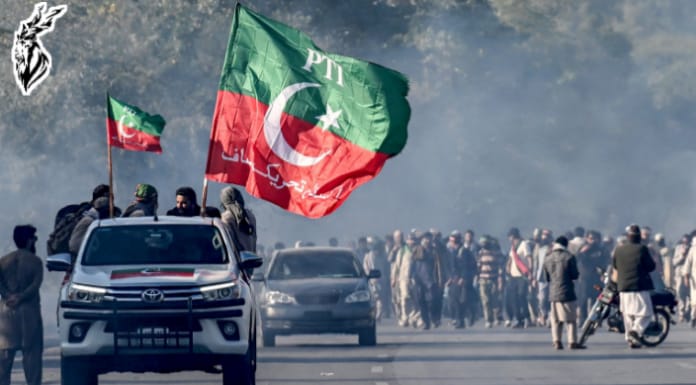

ISLAMABAD: On Monday, the Islamabad High Court (IHC) reserved judgment on a petition seeking to block the PTI’s planned long march and protest set for September 27 in the capital.
The PTI has called for demonstrations across the country, including in Islamabad, on that date to push for the release of party founder Imran Khan and to rally public support around constitutional supremacy.
Citizen Waqas Ahmed filed the challenge, arguing that the demonstration would interfere with everyday life, traffic flow, and commercial activity in the capital.
The case is being heard by a larger bench led by IHC Chief Justice Sardar Muhammad Sarfraz Dogar, alongside Justice Muhammad Azam Khan and Justice Muhammad Asif.
The bench reserved its decision after the Khyber Pakhtunkhwa police chief gave assurances to the court that the protest would not involve any “illegal or unconstitutional activities.”
During proceedings, Chief Justice Dogar referenced an earlier statement by KP Advocate General Shah Faisal Utmankhel, who had previously mentioned that notices seeking judicial assistance had been sent to provincial authorities.
The chief justice, however, clarified that no such notice had been issued under Section 27-A of the Civil Procedure Code, noting that judicial assistance from provincial law officers could only be requested through the attorney general — the federal government’s designated law officer.
Islamabad Advocate General Naveed Hayat Malik, also present at the hearing, told the bench that an application had been submitted requesting permission to show footage from the PTI’s 2022 and 2024 protests.
He noted that PTI leadership was insisting the upcoming march would be peaceful and intended to bolster judicial independence, and said he wanted to present the court with both statements from party leaders and video evidence from past demonstrations.
Justice Dogar initially hesitated to permit the video screening. “That is not the practice of this court,” he remarked when the AG requested to show footage from the November 2024 protest. When the law officer noted that the Supreme Court had allowed similar video evidence in the past, the chief justice responded that the IHC did not want to normalize video screenings as standard courtroom practice.
Following a short recess, the bench agreed to allow the footage, though the chief justice specified it would only be shown a single time.
The Islamabad AG proceeded to play clips from the 2022 and 2024 protests, arguing that neither demonstration could reasonably be called peaceful. He claimed that during the 2022 protest, state resources had been misused and that cranes were used to remove barricades set up by the Islamabad administration.
He further alleged that property at D-Chowk had been set on fire and that a police officer lost his life amid the violence.
According to the law officer, comparable incidents unfolded during the 2024 protest, which he characterized as an “assault on Islamabad.” “This was by no means peaceful. This does not look like a scene from a public rally,” he told the court, alleging that protesters had fired projectiles at police and that Rangers personnel had been struck by a vehicle.
He also cited vehicles being torched near F-9 Park and pointed to existing legal requirements governing public assemblies in the capital, explaining that any party wishing to hold a protest must submit a detailed application so authorities can plan security accordingly.
He said the district magistrate holds the power to approve or deny such requests, and that no protest could proceed without that authorization. The government, he added, also retains the authority to designate areas as “red zones” and impose restrictions — including Section 144 of the Code of Criminal Procedure — when necessary to preserve public order.
The AG argued that the PTI’s march ultimately served two goals: securing the release of a convicted individual and pushing for the government’s removal — both of which he described as unconstitutional aims.
“They claim to be protesting for the rule of law and the strengthening of the judiciary,” he said, adding that seeking a prisoner’s release should go through the courts, not the streets. “If you are dissatisfied with the prime minister, go to Parliament and move a vote of no-confidence,” he said. “If you want to topple the government in the streets and public squares, then do not speak of the rule of law.”
Pushing back on the PTI’s framing that the march was meant to support the judiciary, the AG argued that rising litigation numbers actually reflect growing public trust in the court system, and maintained there was no indication the protest would proceed peacefully.
He also acknowledged that the administration lacked the “physical capacity” to halt a crowd of the size PTI could potentially mobilize. “We can only make precautionary arrangements, such as imposing Section 144 and placing containers,” he said. “We cannot fire upon our citizens; we cannot take their lives,” stressing that preemptive steps were essential before the situation escalated beyond control.
Representing the petitioner, lawyer Chheena disputed claims that the case was premature, noting that the KP advocate general had argued the petition couldn’t be considered before any protest actually occurred.
“My life and my children’s education are fundamental rights under the Constitution,” he argued, questioning whether citizens must wait for actual harm before seeking court intervention. “Should I only come to court after my children’s school has been seized?” he asked, adding that it made little sense to require someone to wait until facing direct danger before pursuing legal protection.
He went on to cite public remarks by KP Chief Minister Sohail Afridi, who the counsel said had pledged to bring millions of people into Islamabad, arguing this mobilization was being organized specifically to secure a convicted prisoner’s release.
“If millions of people arrive here, will the government direct this court to grant bail to the prisoner?” he asked. “Is such a thing possible? What would become of judicial independence?”
He maintained that protests aimed at “unconstitutional objectives” were impermissible, noting that the Islamabad AG himself had conceded the administration couldn’t physically restrain a crowd potentially numbering in the millions.
The court also summoned KP Inspector General Zulfiqar Hameed, directing him to read aloud an affidavit he had submitted. Afterward, Chief Justice Dogar pressed him on what specific steps provincial police intended to take to prevent what he termed an “illegal protest.”