

The Sindh gender parity report, the province’s first comprehensive assessment of gender equality, was unveiled on Friday in Karachi, presenting a mixed picture of notable progress alongside persistent disparities across health, education, employment, and political participation.
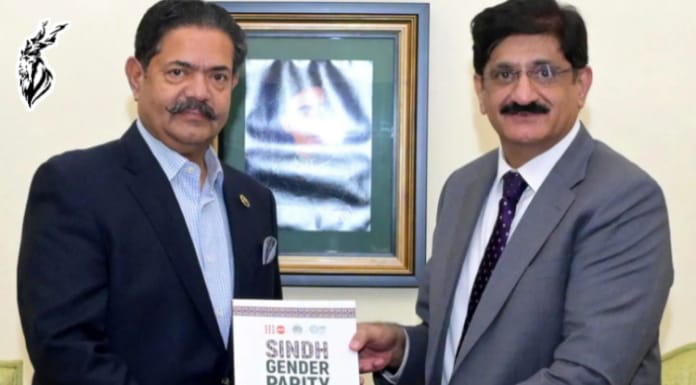
Presented to Sindh Chief Minister Murad Ali Shah by Special Assistant to CM on Human Rights Rajvir Singh Sodho at the CM House, the Sindh gender parity report provides the first provincial baseline on gender disparities and progress across key sectors, including health, education, justice, governance, economic participation, and demographics, according to a press release issued by the CM House.
According to the report, Sindh’s population reached 55.69 million in 2023, growing at an annual rate of 2.57 per cent, with a sex ratio of 108.76 males for every 100 females.
The health sector recorded steady progress, with public allocations increasing from Rs214.5 billion in 2023-24 to Rs267.54 billion in 2024-25, and projected to rise further to Rs318.22 billion in 2025-26. Maternal mortality declined significantly from 314 to 224 deaths per 100,000 live births, while neonatal mortality stood at 24 deaths per 1,000 live births.
Despite these gains, the education sector remains one of the province’s most significant challenges. The report shows male literacy at 68 per cent compared to 47 per cent among females, while literacy among rural women remains critically low at 27.52 per cent. More than 4.08 million girls between the ages of five and 16 remain out of school, underscoring the urgent need to address enrolment gaps.
Workforce representation also remains skewed. Women account for only 4.34 per cent of the police force and 13.7 per cent of the judiciary, highlighting deep-rooted barriers to women’s participation in decision-making roles and public institutions.
Political participation, however, has shown encouraging momentum. The number of women contesting general elections rose from 23 in 2018 to 53 in 2024, reflecting growing engagement in the electoral process and a slow but measurable shift in political representation.
The Sindh gender parity report also identifies persistent gaps in digital access and decision-making roles, areas that the provincial government will need to address alongside the more visible challenges in literacy and school enrolment. The findings are expected to inform policy priorities and budget allocations in the coming years.
While the report acknowledges meaningful strides in maternal health, female employment, and political participation, it makes clear that gender equality in Sindh remains a work in progress, with millions of girls still outside the classroom and women largely absent from key institutions.
Source: Dawn News