
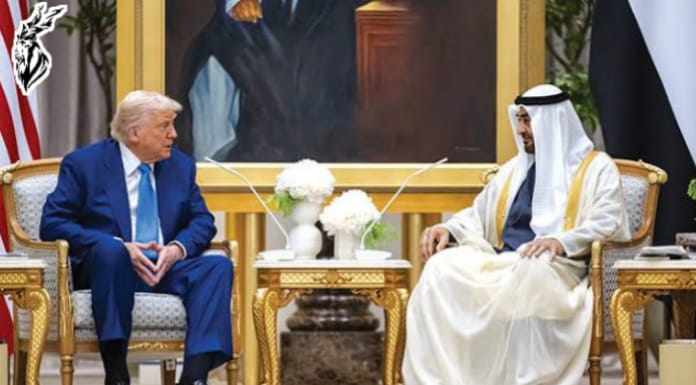

The United Arab Emirates has formally accepted an invitation from the United States to join President Donald Trump’s newly proposed Gaza Board of Peace, according to a statement issued by the UAE Ministry of Foreign Affairs on Tuesday. With this decision, Abu Dhabi becomes one of the first governments to publicly endorse the initiative, signaling early support for Washington’s latest effort to reshape international conflict-resolution mechanisms.
In its statement, the foreign ministry said the UAE stands ready to play an active role in advancing the objectives of the Board of Peace, emphasizing its commitment to promoting international cooperation, stability, and shared prosperity. The acceptance marks a clear alignment with the United States as it seeks to establish a new framework for addressing global conflicts.
The announcement comes amid cautious and mixed reactions from governments around the world to Trump’s proposal. According to a copy of the invitation letter and a draft charter reviewed by Reuters, the Board of Peace is intended to initially focus on the ongoing war in Gaza, before expanding its mandate to address other international conflicts.
While some countries have responded positively in principle, others have stopped short of full endorsement. Italian Prime Minister Giorgia Meloni said Rome was prepared to “do its part,” though without offering explicit commitments. Canadian Prime Minister Mark Carney indicated that Ottawa had agreed in principle to participate, pending further clarification on the board’s structure and mandate.
The inclusion of a formal “charter” in the invitation letter has raised concerns among several European governments, particularly over the potential implications for the United Nations. Some officials fear the new body could undermine or bypass existing multilateral institutions, especially as Trump has repeatedly criticized the UN for what he describes as its failure to support his efforts to resolve international conflicts.
The Board of Peace would be chaired for life by Trump himself. Member states would normally serve three-year terms, unless they contribute $1 billion each to fund the board’s activities, a payment that would grant them permanent membership. The unusual governance model has drawn quiet criticism from diplomats, who question both its legitimacy and its compatibility with existing international norms.
The White House said in a post on X that the arrangement is designed to reward long-term commitment. “This simply offers permanent membership to partner countries who demonstrate deep commitment to peace, security, and prosperity,” the statement said.
Hungary has also issued an unequivocal acceptance of the invitation, while most other governments have so far refrained from public comment. However, diplomats say many states have privately expressed reservations about the initiative, particularly regarding its potential impact on the authority and central role of the United Nations in global peace and security efforts.