Home Blog Page 158

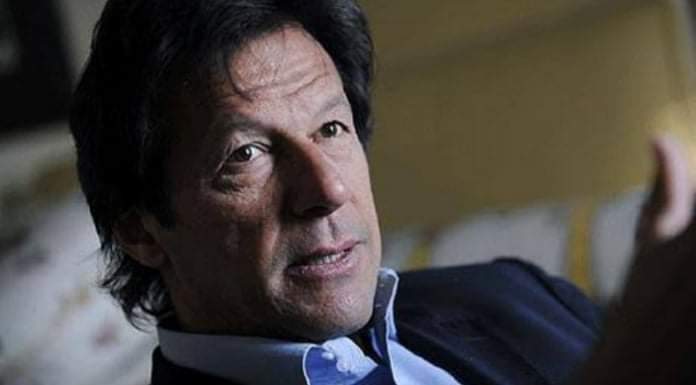
Respect Of Our Prophet ﷺ Is Paramount, Don’t Mock Him, We Can’t Tolerate This Insult The Way West Can’t Tolerate Anything Against Holocaust, Says Imran Khan

Prime Minister in an interview with The Middle East Eye in Islamabad highlighted the biggest problem faced by Muslims in the West i.e, Islamophobia. He said that all Muslims but especially the ones who have a sort of symbol of Muslimness they are being targeted and insulted in the West, just because they look Muslim.

He said that people in the West cannot understand love, respect, the reverence we have for our Holy Prophet ﷺ. He said that we Muslims respect and love him out of this world and love for him is paramount in our religion. He said that the west write so many interpretations of the life of the Prophet (Peace Be Upon Him) but nobody questions them.

He said that they mock and insult him. He added that he considers this act of them as Holocaust because the interpretations which they make are baseless. This causes pain to the Muslim world. In this globalised world and so-called educated society, no one has the right to insult our beloved Prophet and cause pain to the Muslim community.

Author: Amna Sheraz

Call Record Reveals Ayesha Akram And Rambo Had Planned To Cash The Minar E Pakistan Incident By Taking Rs. 550,000 From All The Suspects

0

Following the case of Ayesha Akram at minar-e-pakistan, police have found an audio recording from Rambo’s mobile.

Rambo is in police custody since Ayesha Akram held him responsible for the incident. Rambo told media during his court appearance that “Ayesha was planning to take Rs.500,000 from each of the suspects in this case. When I tried to convince her not to do so, she threatened me that if I don’t accept her demands, I would have to face jail”.

During the four-day physical remand of Rambo, many things are coming to light. Police seized his phone and found an audio recording of a call between Ayesha Akram and Rambo.

DIG Shariq Jamal Khan says that audio recording reveals that Ayesha and Rambo, both were planning to take money from all the suspects who have been arrested so far. Ayesha told Rambo that people can hardly pay Rs.550,000 as they belong to low income group.

According to DIG Shariq Jamal, the audio recording found from Rambo’s mobile, has been made a part of the case.

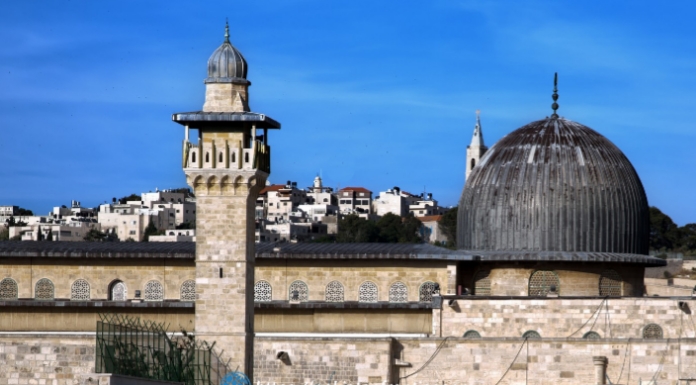
Israeli Court Changes The Status Quo Of Masjid Al Aqsa By Allowing Jewish Prayers Inside Masjid Al Aqsa

0

An Israeli Judge’s conclusion this week that “quiet” Jewish prayers should be allowed in the Al Aqsa mosque, highly regarded by Muslims and Jews, has agitated Palestinian anger over the Jerusalem crisis.

After this hypocrite decision, Turkey on Thursday highly condemned the Israeli court decision for giving Jewish people access to Al Aqsa, which they called “quiet” prayers. Al Aqsa is 3rd holiest site in Islam and was Kibla-E-Awal for Muslims and strong sentiments are connected to this place.

Moreover, the Turkish Foreign Minister in a written statement said that it may aggravate the fanatic circles that may try to erode the status quo at the Al Aqsa mosque and it will ultimately create a new wave of tension.

Continuing He said that we demand the international community to highly oppose this hypocrite, unlawful and threatening decision and all incitement against the Al Aqsa Mosque.

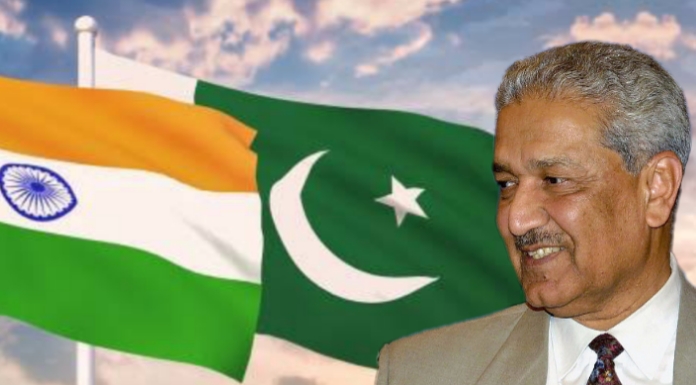
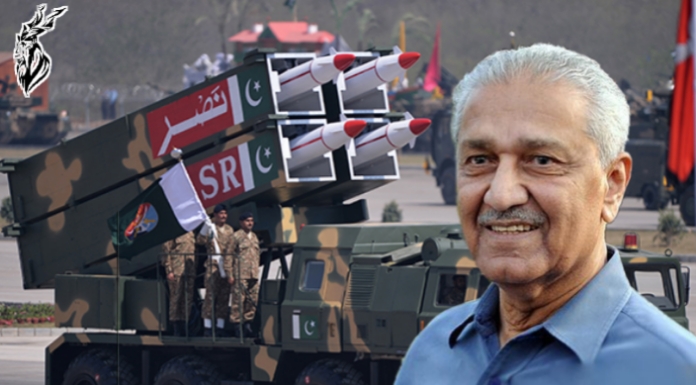
Dr Abdul Qadeer Khan, The Man Who Left Everything To Develop Atomic Weapons For Pakistan

0

The family of Dr Abdul Qadeer stayed in India, Bhopal after partition, untill 1952 when they had to immigrate to protect themselves from Hindu extremism.

In 1952, 16 year old Abdul Qadeer Khan came to Pakistan along with his family and settled in Karachi. A year later, Dr Abdul Qadeer Khan got admission in D.J Sindh Government College in Karachi. After that, he took admission in the University of Karachi and completed Bachelor’s in Metallurgy.

After completing his degree, he got the job of weight and measure inspector in Karachi, where he served for 3 years. After leaving the job of weight and measure inspector, he moved to West Berlin to pursue his education in Master’s.

In 1974, India did a nuclear test and threatened Pakistan, Dr Abdul Qadeer Khan wrote a letter to the Prime Minister of Pakistan, Zulfiqar Ali Bhutto and said that he want to offer his expertise to develop atomic weapons for self defence of Pakistan.

Dr Abdul Qadeer Khan knew about the hate Hindu Indian government had for Muslims and Pakistan, therefore he gave up his luxurious life to serve Pakistan’s self defence capability and did selfless efforts to develop nuclear weapons for Pakistan.

Durand Line: Dissecting facts from narratives

0

Former Afghan President Ashraf Ghani before the fall to Kabul demanded that Taliban must not recognize the Durand. Ironically he asked the very group to not recognize the international border with Pakistan, which Ghani and his colleagues in Kabul label as ‘Pakistani proxies’.
Durand line constitutes the 2670 kilometers long border between the modern day states of Pakistan and Afghanistan. The border or Durand line has been a source of peddling narratives by Pashtun nationalists ever since inception of Pakistan in 1947. What is noteworthy is that the state of Afghanistan has historically resented from recognizing the line as sovereign border with Pakistan. From 1947 to contemporary times, there have been various instances where Afghanistan, violating the sovereignty of neighboring Pakistan, tried to upheave tensions in areas constituting the Durand line. Relations went to a new low when Afghanistan’s state forces were involved in an incursion in Bajaur in September 1960. Afghan forces were driven back by Pakistani Pashtuns and armed forces, several Afghan troops also surrendered. This resulted in Pakistan severing diplomatic ties with Afghanistan

History of Durand Line

The Durand Line was declared as the Independent border between British held India and Afghanistan. The agreement was signed between British government representative, Mortimer Durand and Afghan ruler Abdur Rahman Khan, in 1893. This treaty resulted in formation of the North Western Frontier Province, presently called as Khyber Pakhtun Khwa. After the death of Abdur Rehman Khan, his son Habibullah Khan, who revisited the previous agreement and signed another agreement in 1905. When Habibullah died in 1919, his son Amanullah became the Afghan monarch. Amanullah tried to take advantage of British indulgence in first world war and started conflict with the British. Amanullah was eventually defeated by the British in the Third Anglo-Afghan War. The Afghan ruler had to go for the ceasefire. A Treaty of Peace was signed on August 8, 1919, at Rawalpindi. Similarly, the treaty of Kabul ( signed in 1921) further solidified the Durand line as border.
When Pakistan emerged as the successor state of colonial British India in August 1947, it naturally inherited the demarcated borders. As per Article 62 Vienna Convention, “A fundamental change of circumstances may not be invoked as a ground for terminating or withdrawing from a treaty”. This means that when any country emerges out of a previous colonial territory, all previous agreements in colonial era will not have their legality affected. This means that all agreements signed by British with Afghanistan will be intact for their dominion of Pakistan.
On the contrary, King Zahir Shah of Afghanistan, ignoring these facts refused to grant recognition to the newly formed neighboring Muslim state of Pakistan. Destabilization tactics were employed using Faqie -e Ipi and former congress allies in the frontier. The rest is all readable history. My aim to inspect the veracity of Afghan claims for the Durand.
Pashtun Nationalists in Afghanistan and Pakistan that buy the narrative of Pashtunistan employ primarily three kinds of arguments.

Signed under duress?

Firstly, it is argued that Afghanistan was forced to sign the agreements under duress. And due to this, Pakistan cannot enjoy the rights of the ‘extinguished person’ which were the British. The multiple instances of revisiting and signing of these agreements between Afghanistan and British downplays this assertion. The evidence of duress at the time of signing in 1893 is not substantial. What is more interesting that Amir Abdur Rehman himself reached out to the British which eventually led to signing of 1893 agreement.
Whether Pakistan inherited the rights of British, Novl Backer, the Secretary of States of Common Wealth Affairs, in his address to the House of Commons on 30th June, 1950 stated that:
“It is His Majesty’s Government’s view that Pakistan is in the international law the inheritor of the rights and duties of the old Government of India, and of His Majesty’s Government in the United Kingdom, in these territories and that the Durand Line is the international frontier”
In this very argument, one hears the popular narrative of Durand expiring after 1993. There is no clause of time limit in any of the signed documents of 1893, 1919 or 1921. So even the ‘ hundred year expiry’ argument has no legal relevance.

Historical Reversion

The second argument takes a dint at history by claiming that historically much of India was under control of Afghanistan, especially present day Pakistan. Analysis through political geography shows that at Maximum extent of Durrani empire founded in 1747, the area controlled eastwards reached Delhi and Lahore. Lahore was ceded to the Mughals in 1798 and Peshawar was lost to Sikhs in 1823. If this premise for having control for seven to eight decades is considered legitimate, then the reader must imagine how the world map would dramatically. If such is taken so, then any other state can claim Afghan lands on the basis of ‘once ruled’ in history. Any state or belligerent could demand a piece of land around the globe on this premise then.

A single nation, divided by borders?

Third argument which is stronger and most frequently used is that of Pashunistan, the idea that Pashtuns of Afghanistan and Pakistan formed a single nation and no border should exist between them.
Sir Olaf Caroe, a British Civil Servant and Administrator of the NWFP during partition, in his famous book The Pathans 550 B.C.–A.D. 1957 opines that :
“the eastern Pathans have enjoyed close economic and political ties with the major states of the Indus valley, and have developed linguistic differences with the western Pathans.”
The map which the proponents of Pashtunistan bring forth depicts a slightly different story for what claim is a single Pashtun nation. That map of Pashtunistan shows the area stretching from the Pamirs all the way to the Arabian Sea. This includes areas with fewer Pashtun populations such as Chitral, Gilgit, Baltistan and Balochistan. This depicts another underpinning under the guise of a nationalist state. The state centric sources ( ruling Pashtuns) would seek to bolster their position in regard to Persian and Turkic speaking Afghans who form a sizeable portion of Afghanistan. Secondly, this too would be the stratagem to seek an outlet to the Arabian sea.

Furthermore, Afghanistan’s Pashtuns constitute 42 percent on the total population. This shows that the notion of ‘single nation’ does not fill well in the amalgamated outlook of Afghanistan itself.
In Pakistan, the Punjabis form nearly 44 percent of the total population but there has never been any political slogan that calls rest of Pakistan’s ethnic or linguistic group as Punjabi, neither there have been attempts to impose a major identity over other groups. Rather Pakistan has always projected the diverse outlook of its identity, be it in national curriculum or its federalist political system.
Present Kabul government and their leaders have often used nationalist narratives to peddle with Pakistan’s sovereignty. Even high ranking officials have not kept themselves from indulging in infantile demeanors. In May, the Afghan National Security Advisor used derogatory language for Pakistan. He used the words of ‘ brothel house’, often used by Pashtun nationalists to mock a neighboring state.

Conclusion

The issue of Durand line, often raised for political point scoring by certain ethno nationalist elements in Afghanistan and even in Pakistan does not hold an academically relevant empiricism when analyzed under lens of political geography. Even when it is compared to other boundary disputes around the globe, neither contemporary claims nor historicity of the above mentioned argumentation hold any substantial weigh.
Present Kabul government and their leaders have often used nationalist narratives to peddle with Pakistan’s sovereignty. Even high ranking officials have not kept themselves from indulging in infantile demeanors. In May, the Afghan National Security Advisor used derogatory language for Pakistan. He used the words of ‘brothel house’, often used by Afghan nationalists to mock Pakistan.
In 21st century, notions of statehood have changed. If elements that denounce history of Durand line want their arguments to hold empiricism, they should be rooted in international law and academic political geography. Otherwise their usual arguments would only serve the supremacist and xenophobic tendencies against other races. Furthermore, it only serves as a smokescreen to hide their own shortcomings in the light of Taliban offensive that captured Afghan districts rapidly, and ANDSF is giving sway without any fight.
Lastly, historical records must be set straight. When a feasible amount of historical literature is available then arguments like ‘blood in soil’ do not hold materiality. Any reader can initiate his/her own little research to go through texts of the multiple agreements signed between British and Afghans to dissect facts from nationalist slogans, provided the latter also has a gruesome underpinnings i.e the persecution of Hazaras under Abdur Rehman Khan, the very monarch signing the Durand line agreement. Neutral enquiry is the basic need to lay rest to the often repeated narratives of Pashtunistan can be laid to rest as Pakistan is a geopolitical reality, and historical revisionism by certain ethno fascists only spoils prospects of peace for Afghanistan itself.

About the Author
Hammad Waleed is a student of International Relation in Islamabad. His interests include discourse analysis, Foreign policy analysis, South Asian affairs, Military and Strategic affairs. He can be reached at [email protected]

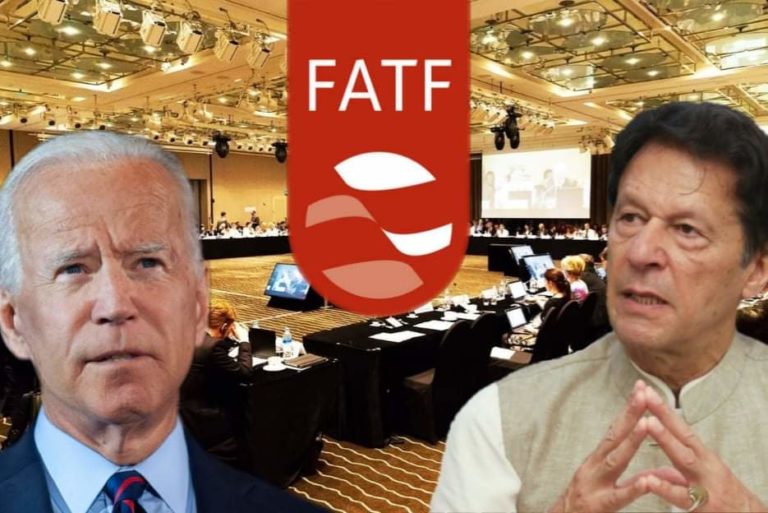
What New Plans US And FATF Have To Keep Pakistan On The Grey List?

0

Pakistan was added to Financial Action Task Force (FATF) grey list in 2018 with the allegations of money laundering, facilitation, and financing of terrorist organizations. Pakistan was assigned a target of 27 points to be met by September 2019, which was later extended due to the COVID-19 pandemic.

At the recent session of June 2021, the Asia-Pacific Observer Group (APG) observed that Pakistan had met 26 points out of 27. However, the most crucial point i.e combating terror financing (CFT) against UN-declared terrorist groups Jaish-e-Muhammad and Lashkar-e-Taiba is yet to achieve by Pakistan and the report suggests retaining Pakistan’s current status of being grey-listed. The report also differentiates between the elements of the complaint, the semi-complaint, and the non-complaints, in line with Pakistan’s results.

This month there will be another session to assess the performance of the countries in the Grey List and Black List. Pakistan’s position in the forthcoming FATF report is at risk because of multiple factors. The first is the non-complaint status vis-à-vis the pivotal issue of combating terrorist groups declared by the United Nations because of the non-compliance within state institutions. Nevertheless, another committee has been framed as previous constitutional amendments, but it seems difficult to catch fish in a trap.

The United States, a major strategic player, is already upset that Pakistan is not letting them use Pakistani air bases to regulate the Taliban regime in Afghanistan. US wrath is evident from the recent Anti-Pakistan bill that has been moved in the US senate alleging Pakistan to be a facilitator of the Afghan Taliban and other UN-declared terrorist groups.

France as an observer of FATF can create obstacles in the wake of the Anti-France movement led by Tahreek-e-Labaik Pakistan (TLP). The government’s response to their application in the national Parliament can serve as fuel.

Pakistan was also targeted for not combatting money laundering through the FATF in 2018. Pakistan assured the APG to incorporate the anti-money laundering and terror financing articles in the Constitution, but the recent Pandora leaks with 700 Pakistanis being listed can change the game for Pakistan.

It is noteworthy that countries with higher number of people in Pandora papers are out of FATF watchdog while dragging Pakistan in greylist for the same issues indicates the hypocratic nature of FATF.

Author: Iqra Arif

Father Of Pakistan’s Atomic Weapons Program Dr Abdul Qadeer Khan Passes Away

0

The founding father of Pakistan’s atomic weapons program Dr Abdul Qadeer Khan who was admitted to hospital due to lung disease passed away this morning.

Born on 1st April 1936, Dr Abdul Qadeer Khan was 85 years old. He was born in Bhopal, India and he migrated to West Pakistan in 1952, at the age of 16.

Dr Abdul Qadeer Khan was graduated from the University of Karachi with a degree in metallurgy. Later he pursued his education abroad, in West Berlin and then in Delft, Netherlands, where he received a master’s degree in metallurgy in 1967.

In 1972, Dr Abdul Qadeer Khan received his doctorate in metallurgical engineering from the Catholic University of Leuven in Belgium. Khan was known for his expertise in nuclear physics and he had enjoyed special access to America’s nuclear facility URENCO. He was the one who played a key role in developing nuclear infrastructure in Pakistan, an infrastructure that was opposed by the west but Dr Abdul Qadeer Khan dedicated all his skills to make Pakistan a nuclear power.

Ayesha Akram Threatened Rambo That She Will Blame Him For Minar E Pakistan Incident If He Did Not Follow Ayesha’s Plan To Cash The Incident

A horrifying incidence of harassment by approximately 400 men on Independence day at Minar e Pakistan continues to take turns and twists on the way. Ayesha Akram, the victim of the incident has accused her partner Rambo of plotting mass grouping against her.

The incident has been a subject of nationwide discussion, splitting the nation into two realities of either sick social values regarding women’s safety or else a publicity stunt. Considering, Rambo, the person who was paid for Ayesha Akram’s security and not only was her close friend but has also collaborated with her in many TikTok videos.

However, sudden bumps have appeared in the story jolting the entire scenario, where Ayesha Akram said that it was Rambo who with his group forced her to Minar e Pakistan. All the incident was pre-planned and people involved in assaulting her were arranged by Rambo himself.

Shortly after Ayesha’s report, Rambo with other six suspects was arrested by police. However, Rambo denies the allegations by saying that he with other accused members has always tried to stand by Ayesha Akram in the proceedings of the case and that Ayesha Akram has threatened them to follow her plan to subject cash of 5 lakh from each suspect otherwise she would blame Rambo for the Incident.

Author: Qurratulain Tahir

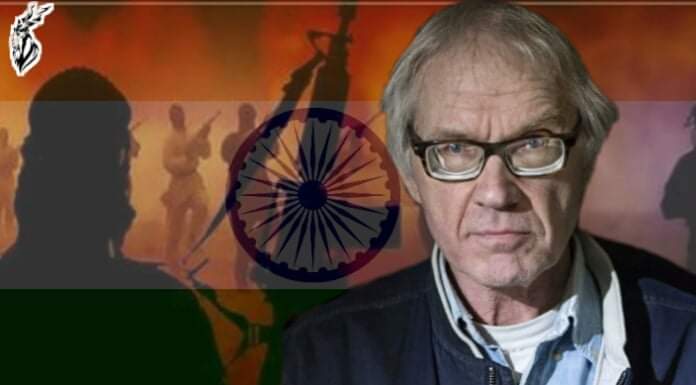
Indian Media Blames Pakistan For The Death Of Blasphemer Cartoonist Amid FATF Meeting

0

As Pakistan is performing exceptionally well regarding the recommendations of the Financial Action Task Force (FATF), Indian media is unable to digest the fact as they have been trying their best to not let FATF remove Pakistan from Grey list.

Indian media is now trying to use the recent killing of the Swedish blasphemer cartoonist to manipulate the global financial watchdog to sanction Pakistan. This killing has no connection with Pakistan at all. However, the Indian media has blamed that Pakistan has sponsored the killing under the name of Lashkar-e-Taiba’s (LeT).

However, the financial watchdog FATF remarked and praised Pakistan’s performance in combating terrorism in its latest follow-up report. “Pakistan has made notable progress in addressing the identifying deficiencies”, remarked the 2nd FATF follow-up report.

Indian Media has always been trying to manipulate and urge global institutions to somehow sanction Pakistan. Recently, the Indian media also reported that FATF will fail in its duty if it did not blacklist Pakistan. Indian Media nullified all the working of FATF to combat terror-financing just to blacklist Pakistan. Despite trying their best, Indian Media got nothing but humiliation as always.

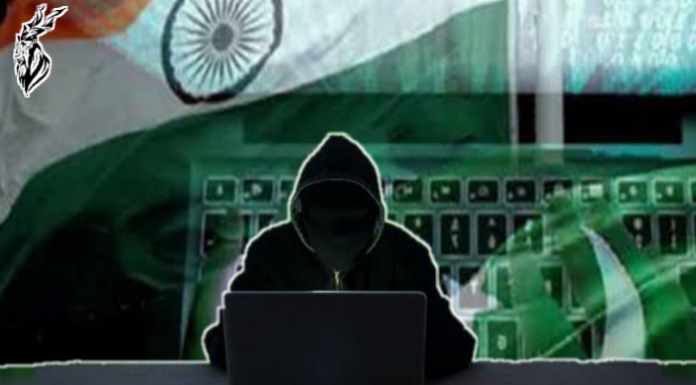
India Considers Pakistan’s Cyber Power More Dangerous Than China’s, Report

0

Research on the qualitative assessment of cyber power in 15 nations was released by the International Institute for strategic studies (IISS). According to the research, India is more concerned with Pakistan’s offensive cyber capabilities than with China’s.

IISS a prestigious think tank has classified cyber capabilities into seven categories, strategy, doctrine, governance, command and control, core cyber-intelligence capability, cyber empowerment and dependence, cyber security and resilience, global leadership in cyberspace affairs, and offensive cyber capability.

Tiers one, two, three, and four are used by the IISS to classify countries, with tier one being the most effective by cyber power.
Only the United States is put in Tier One, as it outperforms the rest of the globe in every category.

India is ranked third in the world because it excels in only a few categories while having “severe deficiency” in others. This category also includes Japan, Iran, Indonesia, Vietnam, Malaysia, and North Korea.

Australia, Canada, China, France, Israel, Russia, and the United Kingdom are in the second tier because they excel in certain areas.

“The military clash with China in the disputed Ladakh border area in June 2020, followed by a rapid increase in Chinese activities against Indian networks was heightened. Indian concerns about cyber security, not least in systems supplied by China” the paper states.

Despite the geo-strategic instability of its region and a deep understanding of the cyber threat it faces, India has many very minimal progress in creating its policy and doctrine for cyberspace security, according to a report released on Monday.

India was so delayed that it took until 2018 and 2019 to establish major coordinating authorities for cyber security in the civil and military spheres.