
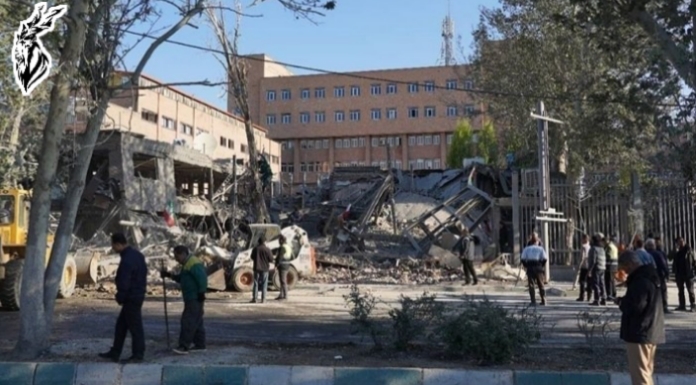

Iran’s premier scientific institution, Sharif University of Technology, lies in ruins after becoming a primary target in coordinated US-Israeli strikes that killed at least 34 people across multiple Iranian cities. The attacks, which included residential areas and critical infrastructure, represent a significant escalation following US President Donald Trump’s Tuesday deadline for Tehran to fully reopen the Strait of Hormuz or face strikes on power plants and bridges.
According to Iranian authorities, the strikes killed 23 people in Tehran’s Baharestan County, including six children under ten years old. Additional casualties were reported in Qom, where five died in a residential building attack, and Bandar-e Lengeh, where six perished. At least a dozen cities experienced bombardment, including Bandar Abbas, Ahvaz, Mahshahr, Shiraz, Isfahan, and Karaj, as reported by Al Jazeera correspondents on the ground.
The targeting of Sharif University, often compared to the Massachusetts Institute of Technology (MIT), has drawn particular condemnation. Al Jazeera’s Tehran correspondent reported extensive damage to the university’s mosque and laboratories. “The Sharif area has witnessed other attacks, including one on a gas facility,” the correspondent noted, adding that roads, power plants, and bridges were also targeted nationwide.
Iranian officials expressed outrage at the academic institution’s destruction. First Vice President Mohammad Reza Aref, a Stanford-educated engineer, accused the US of deploying a bunker-buster bomb against the university. “The bunker-buster bomb attack on Sharif University is a symbol of Trump’s madness and ignorance,” Aref stated on social media platform X. “He fails to understand that Iran’s knowledge is not embedded in concrete to be destroyed by bombs.”
The Ministry of Science and Technology revealed that at least 30 universities have been struck since hostilities began on February 28. Meanwhile, the International Federation of Red Cross and Red Crescent Societies expressed deep concern about attacks on medical facilities, noting that four Iranian Red Crescent volunteers have been killed in five weeks of conflict.
In a significant development, Iran’s Islamic Revolutionary Guard Corps confirmed that Major-General Majid Khademi, head of the IRGC Intelligence Organisation, was killed “during a terrorist attack by the American-Zionist enemy.” The Atomic Energy Organisation of Iran separately condemned an attack on its heavy water facility as “a crime against science and human health,” though it didn’t specify when the bombing occurred.
The escalation follows Trump’s ultimatum regarding the strategic Strait of Hormuz, through which approximately one-fifth of the world’s oil passes. Analysts suggest the university strikes represent an attempt to cripple Iran’s scientific and technological capabilities, while the broader attacks aim to pressure Tehran into compliance with US demands.
Source: Al Jazeera