
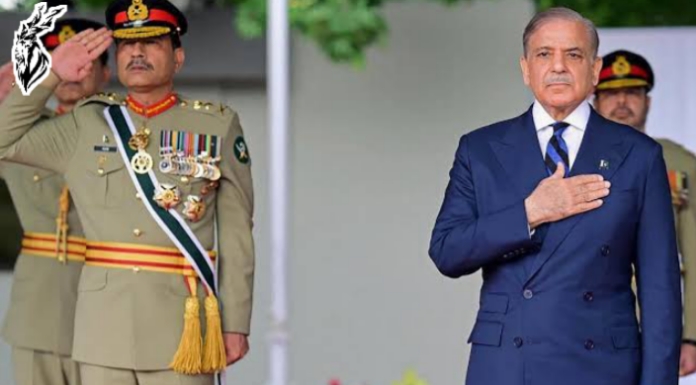

Leaders and lawmakers from around the world, including the United States, have acknowledged Pakistan’s diplomatic efforts in facilitating a two-week ceasefire between Washington and Iran, reached shortly before a deadline set by US President Donald Trump.
In a post on Truth Social, Trump said he had agreed to the temporary truce with Iran following discussions with Pakistan’s Prime Minister Shehbaz Sharif and the country’s army chief and chief of defence staff, Asim Munir.
The announcement marked a sharp shift from Trump’s earlier warning that “a whole civilisation will die tonight” if his demands were not met. The US president had set an 8pm ET deadline on April 8 for a ceasefire agreement.
Following the announcement, Sharif wrote on X that Iran, the United States and their allies had agreed to an immediate ceasefire across the region, including in Lebanon. He welcomed the development and thanked the leadership of both countries, while inviting their delegations to Islamabad on April 10 for talks aimed at reaching a comprehensive settlement.
Iranian Foreign Minister Abbas Araghchi expressed appreciation for Pakistan’s role, thanking “my dear brothers PM Sharif and Field Marshal Munir for their tireless efforts” to help end the conflict. He said Iran’s Supreme National Security Council had agreed that if attacks on Iran stopped, its armed forces would halt defensive operations and move toward negotiations.
Jane Marriott, the UK’s high commissioner to Pakistan, thanked Islamabad for the “quiet, effective, diplomatic role” it played in helping secure the ceasefire.
Winston Peters, the foreign minister of New Zealand, also welcomed the ceasefire announcement and acknowledged Pakistan’s efforts alongside those of Turkiye and Egypt to help find a resolution to the crisis.
In a joint statement, Anthony Albanese, the prime minister of Australia, and Foreign Minister Penny Wong welcomed the two-week truce and thanked mediators including Pakistan, Egypt, Turkiye and Saudi Arabia for their diplomatic efforts, stressing the need to uphold the ceasefire and work toward a lasting solution.
Kassym-Jomart Tokayev, president of Kazakhstan, also welcomed the ceasefire agreement, noting that it was achieved with mediation from Sharif and Field Marshal Munir and with the involvement of the leadership of both the United States and Iran.
Anwar Ibrahim, the prime minister of Malaysia, congratulated Pakistan and Sharif for what he described as courageous diplomacy that helped bring about the ceasefire, adding that Islamabad’s willingness to engage all sides reflected a strong commitment to peace.
Antonio Guterres, the secretary-general of the United Nations, welcomed the truce and urged all parties to use the opportunity to pursue a lasting peace in the Middle East, while expressing appreciation for Pakistan and other countries involved in facilitating the ceasefire.
Friedrich Merz, the chancellor of Germany, thanked Pakistan for its mediation efforts, saying the focus must now shift toward negotiating a durable end to the conflict.
Espen Barth Eide, foreign minister of Norway, also commended Pakistan, Egypt and Turkiye for their diplomatic initiatives while welcoming the US-Iran ceasefire.
Kaja Kallas, the European Union’s high representative for foreign affairs, thanked Pakistan’s deputy prime minister and foreign minister Ishaq Dar for helping secure the initial ceasefire agreement between the United States and Iran.
Tarım Ali Khan, Canada’s high commissioner to Pakistan, expressed appreciation for Sharif’s efforts in creating an opportunity for dialogue and ceasefire between the two sides.
Ursula von der Leyen, president of the European Commission, also thanked Pakistan for acting as a mediator in the conflict between the United States and Iran.
Antonio Costa, president of the European Council, likewise acknowledged Pakistan’s role and thanked all parties involved in facilitating the mediation process.
Maria Malmer Stenergard, foreign minister of Sweden, also praised Pakistan along with other mediators for their efforts to help bring about the ceasefire and encourage negotiations between Washington and Tehran.