

When Narendra Modi unveiled the vision of Atmanirbhar Bharat in 2020, it was presented as a transformative project for India—an economic reset that would strengthen domestic industry, reduce import dependence, and empower local producers. The slogan “Vocal for Local” quickly became a rallying cry for economic nationalism in the wake of the pandemic.
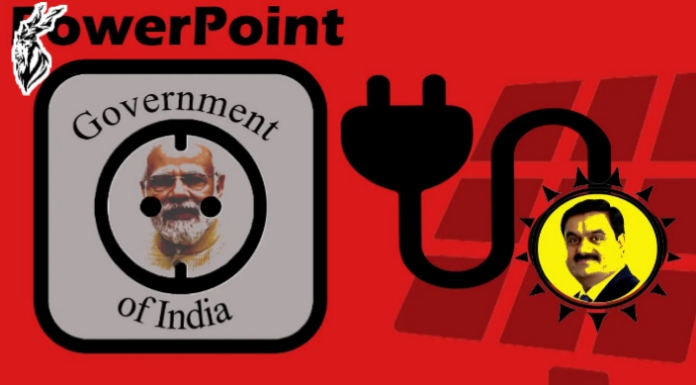
Yet several years later, the promise of self-reliance increasingly appears less like a coherent economic strategy and more like a political narrative. The gap between rhetoric and reality has become difficult to ignore. If anything, recent developments suggest that the policy risks evolving into something critics describe as proximity capitalism, where industrial opportunities increasingly flow toward politically connected corporations rather than toward building broad domestic capacity.
At the heart of the issue lies a basic contradiction. Genuine self-reliance requires consistent policy support for domestic production—through long-term investment, stable regulatory frameworks, and transparent procurement systems. Instead, economic policies often move in conflicting directions. In sectors such as agriculture and manufacturing, imports are frequently allowed or expanded even while citizens are urged to “support local.” While cheaper imports may help control prices in the short term, they can undermine domestic producers and weaken the very industries that self-reliance is meant to strengthen.
But perhaps the most revealing contradictions emerge in India’s defence sector.
A recent development highlights these tensions clearly. Adani Group has signed a memorandum of understanding with the Italian aerospace company Leonardo S.p.A. to build an integrated helicopter manufacturing ecosystem in India. The partnership aims to position the venture for a potential market of around 1,000 military helicopters, a segment of defence procurement worth tens of thousands of crores in the coming decades.
On paper, such collaborations could be framed as strengthening domestic manufacturing. Yet the deeper context raises troubling questions.
Leonardo is not simply another foreign aerospace company entering the Indian market. The firm was implicated in the ₹3,600-crore VVIP helicopter bribery scandal that shook India’s defence establishment in the early 2010s. The controversy resulted in the company being blacklisted from Indian defence deals between 2014 and 2019. Yet by November 2021, the firm was quietly allowed to re-enter India’s defence ecosystem. There was no extensive parliamentary debate, no public white paper, and little explanation offered to the public about the rationale for reinstating the company.
Now Leonardo’s re-entry is unfolding through a partnership with one of India’s most politically influential conglomerates.
This sequence of events is difficult to dismiss as coincidence. Rather, it reflects what critics argue is a recurring pattern in India’s evolving industrial policy.
Memorandums of understanding, for example, often serve as staging grounds for future contracts. The Adani-Leonardo agreement does not immediately award a defence contract. Instead, it establishes partnerships, infrastructure, and operational positioning that may prove advantageous when future tenders emerge. By the time competitive bids are formally invited, the ecosystem may already be structured in ways that favor particular players.
The move also raises questions about the role of India’s existing defence manufacturing capabilities. Hindustan Aeronautics Limited—India’s flagship aerospace public sector enterprise—has already demonstrated strong indigenous capacity. In March 2025, HAL secured a ₹62,700-crore order for 156 LCH Prachand combat helicopters, a platform designed and produced within India.
If the domestic ecosystem already possesses the ability to develop and manufacture advanced helicopters, the central question becomes unavoidable: why is a parallel private manufacturing ecosystem being cultivated around firms with controversial histories?
Symbolism in defence policy matters as much as contracts themselves. Reports indicate that senior officials such as the Defence Secretary and the Director General of Acquisition were present during the signing of the Adani-Leonardo MoU. When the country’s highest procurement authorities attend private corporate agreements, the signal is unmistakable. It suggests that these partnerships are not merely exploratory—they carry the implicit weight of state endorsement.
Taken together, these developments resemble a broader playbook that has appeared across multiple sectors of India’s defence industry. Eligibility rules evolve, corporate acquisitions expand capabilities, and partnerships with foreign firms position certain companies advantageously before formal procurement processes begin. By the time tenders are announced, the competitive field may already be tilted.
Legally, these arrangements may remain within existing procurement rules. Yet the broader constitutional principle behind government contracting—enshrined in Article 299 of the Indian Constitution—exists precisely to ensure transparency and accountability in state agreements. When major defence partnerships develop through informal or pre-tender arrangements, critics argue that the spirit of open competition risks being weakened.
The deeper issue is not about any single corporate group. Nor is private sector participation in defence manufacturing inherently problematic. In fact, diversified industrial ecosystems can strengthen national security and innovation. The problem arises when industrial policy begins to blur the line between strategic economic planning and corporate favoritism.
In that context, the rhetoric of Atmanirbhar Bharat begins to look increasingly hollow. Self-reliance cannot be achieved through slogans or branding campaigns. It requires sustained investment in research, technological capability, education, and institutional transparency. It requires building competitive industries that can thrive globally, not merely reshuffling domestic procurement opportunities among a handful of powerful conglomerates.
The danger of populist economic narratives is that they mobilize national pride while avoiding deeper structural questions—about unemployment, productivity, institutional reform, and the long-term direction of economic policy. By framing economic challenges as problems of foreign dependence, policymakers can shift attention away from domestic governance failures.
This is why critics increasingly ask a provocative question: is the policy truly Atmanirbhar Bharat—or something closer to “Atmanirbhar Adani”?
The question is ultimately about credibility. Defence manufacturing is not merely an economic activity; it is deeply intertwined with national security, democratic accountability, and public trust.
If India genuinely seeks self-reliance, the path forward must rely on transparent procurement, strong public institutions, and fair competition across the industrial ecosystem. Because self-reliance cannot be declared through political messaging.
It must be built—patiently, transparently, and in ways that strengthen the nation rather than the networks of power around it.