
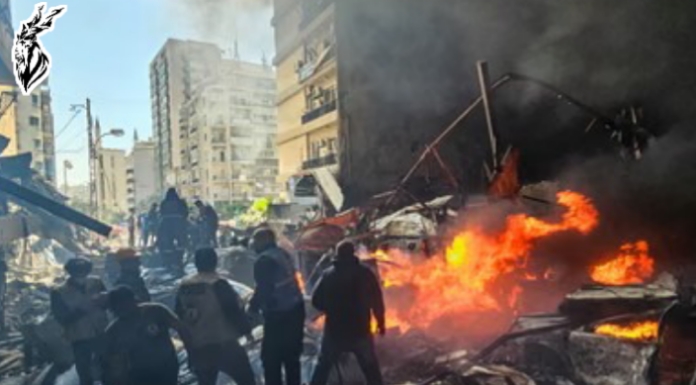

Israel has explicitly excluded Lebanon from a provisional ceasefire agreement with Iran, launching continued air strikes across the country while regional tensions escalate. The announcement comes as U.S. President Donald Trump labeled the Israel-Lebanon conflict a “separate skirmish” from the broader Iran negotiations, creating uncertainty about diplomatic resolutions in the Middle East.
Israeli military operations have intensified in southern Beirut and other Lebanese regions, with the Israel Defense Forces (IDF) warning residents to flee combat zones. Lebanese Prime Minister Hassan Diab has condemned the strikes, accusing Israel of killing unarmed civilians and violating international norms. “Israel is targeting innocent people under the guise of security operations,” Diab stated, calling for immediate international intervention.
The provisional ceasefire between Israel and Iran, announced earlier this week, has created a complex diplomatic landscape. While Iran has agreed to cease uranium enrichment and participate in talks in Islamabad, the exclusion of Lebanon from the agreement has raised concerns about regional stability. Hezbollah, the Lebanese militant group, remains a central point of contention, with Trump citing their presence as justification for Lebanon’s exclusion from the ceasefire.
Maritime tensions continue in the Strait of Hormuz, where the Iranian navy has threatened ships without permission, though commercial traffic has partially resumed. Meanwhile, international leaders have expressed mixed reactions to the ceasefire arrangement. Spanish Prime Minister Pedro Sánchez emphasized that “now it’s time for diplomacy, legality and peace,” while Israeli opposition leaders have called the agreement a “political disaster” that fails to address security concerns.
Regional diplomacy faces significant challenges as Lebanon’s president calls for inclusion in “regional peace” initiatives and Oman’s foreign minister urges all parties to return to negotiations. The situation remains fluid, with analysts warning that the ceasefire’s fragility could lead to renewed escalation if Lebanon’s status isn’t addressed comprehensively. Reuters reports that emergency responders continue working at strike sites in Beirut, highlighting the human cost of the ongoing conflict.
As international observers monitor developments, questions remain about whether the ceasefire will lead to lasting peace or merely pause one conflict while another intensifies. The exclusion of Lebanon from diplomatic arrangements suggests that regional tensions may persist despite progress on the Iran front, with BBC Middle East analysts noting that “unthinkable escalation has been avoided, but the ceasefire is not yet definitive.”
Source: The Guardian