
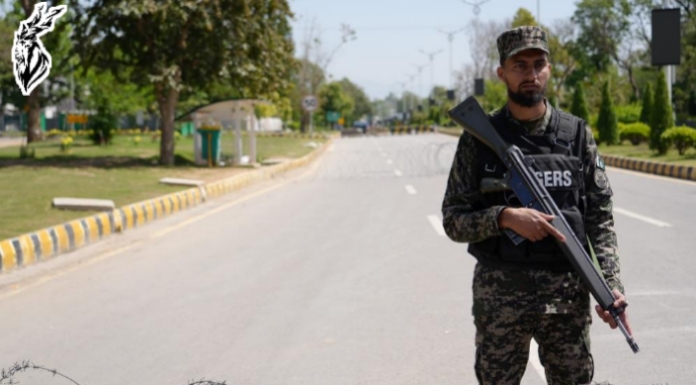

ISLAMABAD – Pakistan has significantly enhanced security protocols across the federal capital as it prepares to host high-stakes peace negotiations between the United States and Iran this weekend. The talks, aimed at transforming a fragile two-week ceasefire into a durable peace agreement, represent a critical diplomatic initiative by Islamabad amid escalating regional tensions.
Interior Minister Mohsin Naqvi has directed authorities to implement “foolproof security and exceptional hospitality” for all visiting delegations. In a high-level review meeting, officials decided to completely seal Islamabad’s sensitive Red Zone during the talks, restricting entry exclusively to authorized personnel. A dedicated control room has been established at the Interior Ministry to monitor all security and logistical arrangements continuously.
The negotiations follow Prime Minister Shehbaz Sharif’s invitation to both nations after Pakistan facilitated the initial ceasefire that halted hostilities on April 8. The conflict erupted in late February when U.S. and Israeli coordinated strikes targeted Iranian leadership and infrastructure, resulting in significant casualties. Iran responded by effectively blocking the Strait of Hormuz – a vital global shipping corridor – and launching strikes against Israeli and U.S. positions across the Gulf region.
Washington’s reported 15-point proposal for the talks centers on Iran’s nuclear enrichment capabilities, ballistic missile programs, sanctions relief, and guaranteed reopening of the Strait of Hormuz. Tehran has countered with a 10-point plan demanding control over the strait, including toll collection for vessels, cessation of all regional military operations, and comprehensive sanctions removal. The divergent positions underscore the complex challenges facing negotiators.
The global community has widely praised Pakistan’s mediating role, with multiple nations offering support for Islamabad’s peace efforts. U.S. Vice President JD Vance is scheduled to lead the American delegation, accompanied by special envoy Steve Witkoff and senior advisor Jared Kushner. Iran’s delegation will be headed by Parliament Speaker Mohammad Bagher Ghalibaf – a former Islamic Revolutionary Guard Corps commander – and Foreign Minister Abbas Araghchi, though it remains uncertain whether active IRGC representatives will participate.
Authorities have declared local holidays in Islamabad and Rawalpindi on April 9-10, closing educational institutions, government offices, and private businesses in the twin cities. Security personnel, including army units, have been deployed at key locations, particularly around the diplomatic enclave and President’s House. The talks occur against a backdrop of ongoing tensions, with U.S. President Donald Trump criticizing Iran’s handling of the Strait of Hormuz and Tehran protesting recent Israeli military actions in Lebanon, which it insists should be covered by any agreement.
As detailed in Reuters coverage, the temporary truce was specifically designed to create negotiation space for ending a conflict that has already claimed thousands of lives and disrupted global economic stability. With the world watching, Pakistan’s capital has transformed into a fortified diplomatic arena where the future of US-Iran relations – and regional stability – will be determined.
Source: Geo News