
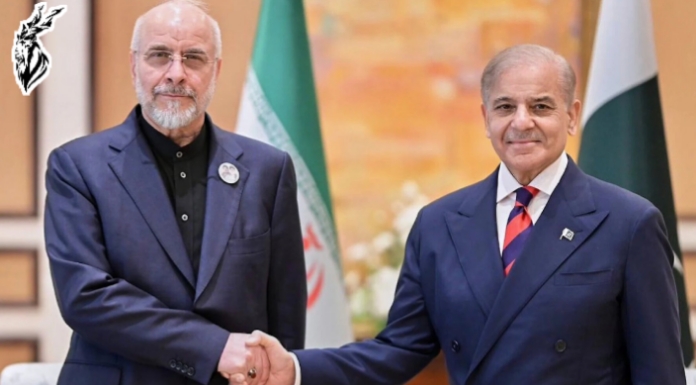

ISLAMABAD—Iranian Parliament Speaker Mohammad Bagher Ghalibaf has publicly acknowledged Pakistan’s pivotal role in brokering recent ceasefire negotiations between Tehran and Washington, while simultaneously voicing deep-seated skepticism toward American intentions. The high-stakes Islamabad talks, held in Pakistan over an intensive 21-hour period, aimed to de-escalate regional tensions but concluded with Iran underscoring a fundamental lack of trust in the United States.
In a post-negotiation statement, Ghalibaf extended formal gratitude to Pakistan, describing it as a “friendly and brotherly country” and thanking the Pakistani people for their support in facilitating the dialogue. “Pakistan has played a constructive and essential role in this process,” he remarked, highlighting Islamabad’s diplomatic efforts as a cornerstone of the discussions. The talks, which involved a U.S. delegation led by figures including JD Vance, sought to address ongoing conflicts and propose pathways toward stability.
Despite the diplomatic engagement, Ghalibaf emphasized that historical grievances continue to cloud Iran-U.S. relations. He pointed to “past experiences, particularly the last two conflicts,” as factors that have left Tehran wary of Washington’s commitments. “We demonstrated good faith and willingness prior to these negotiations,” Ghalibaf stated, “but the United States has yet to earn our trust in this round.” He revealed that Iranian delegates presented forward-looking proposals during the sessions, yet the U.S. side failed to sufficiently address Tehran’s core security concerns.
Ghalibaf framed the negotiations within Iran’s broader strategic doctrine, describing diplomacy as “a tool of authority alongside military resistance.” He asserted that Iran remains committed to safeguarding what he termed “the achievements of its recent national defense,” a likely reference to regional military and geopolitical gains. The speaker also highlighted domestic unity, noting that Iran’s population of approximately 90 million stands firmly behind its leadership, with public demonstrations in support guided by Supreme Leader Ali Khamenei.
The Iranian delegation’s performance during the marathon talks received commendation from Ghalibaf, who praised their resilience and strategic acumen. However, he concluded with a pointed message to Washington: “America has understood our logic and principles. It is now up to them to decide whether they can build trust with Iran.” This sentiment echoes longstanding tensions, as detailed in analyses by Reuters on Middle Eastern geopolitics.
The Islamabad Talks represent a critical, albeit cautious, step in international diplomacy, with Pakistan emerging as a key mediator in a volatile region. While the discussions did not yield immediate breakthroughs, they underscore the complex interplay of regional alliances and persistent mistrust between historic adversaries. For further context on Iran’s foreign policy, see BBC News coverage.
Source: ARY News