
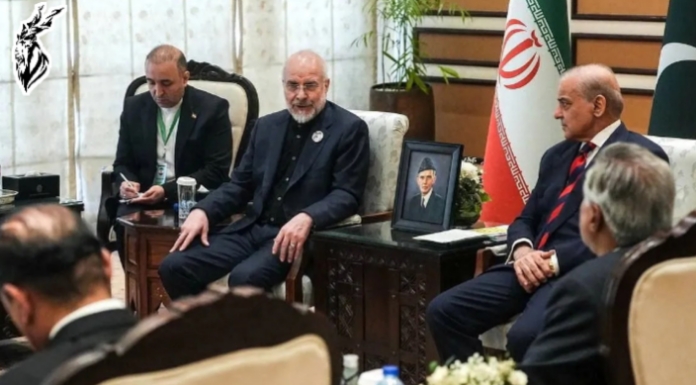

ISLAMABAD: Deputy Prime Minister and Foreign Minister Ishaq Dar on Sunday stressed that it was “imperative” for the United States and Iran to maintain their ceasefire commitments after the conclusion of intensive negotiations in Islamabad.
The trilateral Islamabad talks, which began on Saturday afternoon, concluded after nearly 21 hours of discussions aimed at turning a fragile truce into a broader peace agreement.
US Vice President JD Vance, who led the American delegation, acknowledged that the talks had not produced a final agreement despite covering several key issues. “The bad news is that we have not reached an agreement,” he said, adding that the outcome would be more concerning for Iran than for the United States.
Following the talks, Vance departed Islamabad aboard Air Force Two, saying Washington had presented its “final and best offer” and that it remained uncertain whether Tehran would accept it. Pakistani officials, including Dar, Chief of Army Staff and Chief of Defence Forces Syed Asim Munir, and Interior Minister Mohsin Naqvi, were present at the airport to see him off.
Speaking after the negotiations concluded, Dar thanked both countries for responding to Prime Minister Shehbaz Sharif’s call for an immediate ceasefire and for accepting Pakistan’s invitation to hold peace talks in Islamabad.
He noted that the US delegation, headed by Vance, and the Iranian delegation, led by parliament speaker Mohammad Bagher Ghalibaf, participated in several rounds of discussions mediated by Pakistani officials over the past 24 hours.
Dar said Pakistan appreciated the recognition given by both sides to its diplomatic efforts in helping secure the ceasefire and facilitating dialogue.
“We hope both sides will continue engaging with a positive spirit to achieve durable peace and prosperity for the entire region and beyond,” he said, reiterating that maintaining the ceasefire was essential.
He added that Pakistan would continue playing its role in promoting dialogue and facilitating further engagement between Washington and Tehran.
The conflict that led to the talks began on February 28 after coordinated strikes by the United States and Israel targeted Iranian leadership and strategic infrastructure. Iran responded with retaliatory actions across the region, including disruptions to shipping in the Strait of Hormuz and attacks on Israeli and US targets.
The six-week confrontation, which left more than 2,000 people dead and heightened regional tensions, was temporarily halted by a ceasefire announced on April 8 following diplomatic efforts led by Pakistan.
Despite the pause in hostilities, major differences remain. Washington has proposed a 15-point framework addressing Iran’s nuclear and missile programmes, sanctions relief and the reopening of the Strait of Hormuz, while Tehran has offered a 10-point proposal seeking greater control over the waterway, transit fees and the complete lifting of sanctions.
Pakistan’s mediation efforts have been widely welcomed by the international community, with many countries expressing support for Islamabad’s role in helping de-escalate tensions and encourage negotiations aimed at securing lasting peace.