
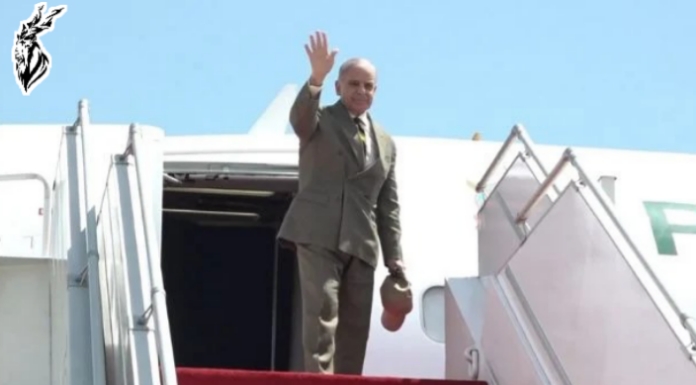

Prime Minister Shehbaz Sharif departed for Saudi Arabia on Wednesday, beginning a three-nation tour aimed at strengthening diplomatic engagement and promoting peace in the Middle East.
According to the Foreign Office of Pakistan, the prime minister will also visit Qatar and Turkey during the trip scheduled from April 15 to 18.
The visits to Saudi Arabia and Qatar will focus on bilateral relations, with Sharif expected to meet the leadership of both countries to discuss cooperation, regional stability and security.
Participation in Antalya Diplomacy Forum
During his stop in Turkey, the prime minister will attend the Antalya Diplomacy Forum, where he is set to participate in the Leaders’ Panel alongside other global figures and present Pakistan’s perspective on key international issues.
On the sidelines of the forum, Sharif is also expected to hold bilateral meetings, including with Turkish President Recep Tayyip Erdoğan and several other world leaders.
Officials say Pakistan’s participation in the forum underscores its commitment to constructive diplomacy, multilateral cooperation and active engagement on global challenges.
Delegation accompanying the premier
The prime minister is accompanied by Deputy Prime Minister and Foreign Minister Ishaq Dar, Information Minister Attaullah Tarar, Special Assistant to the Prime Minister Syed Tariq Fatemi and other senior officials.
Visit amid diplomatic efforts
The tour comes as Pakistan has gained international attention for hosting high-level talks between the United States and Iran in Islamabad amid rising tensions in the region.
The negotiations, which began on Saturday and continued into early Sunday, marked the highest-level direct engagement between the two countries in more than a decade and their most significant dialogue since the Iranian Revolution.
The talks took place shortly after a ceasefire was announced following six weeks of fighting in the Gulf region that disrupted energy supplies and raised fears of a broader conflict.
Despite nearly 21 hours of discussions, the two sides were unable to reach a formal agreement. In the aftermath, the U.S. military signalled plans to impose a naval blockade on maritime traffic entering and leaving Iranian ports, a move that could further strain the fragile two-week ceasefire.