
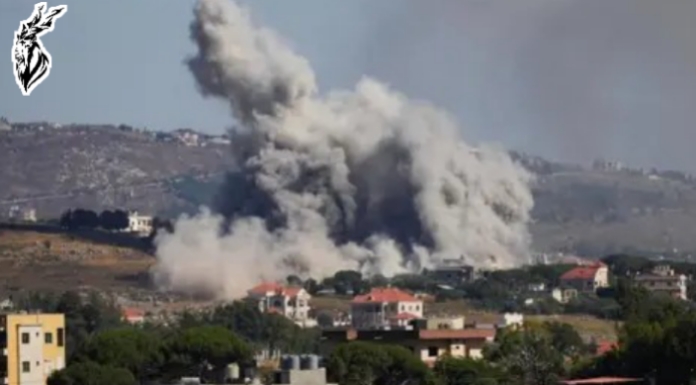

Beirut: At least 16 people were killed in Israeli airstrikes across southern Lebanon and the Bekaa Valley on Saturday, only hours after a ceasefire agreement between Israel and Hezbollah came into force, raising fresh concerns about the durability of the truce.
According to Lebanon’s Civil Defence and state-run National News Agency, Israeli warplanes and drones carried out multiple strikes in different parts of the country. The attacks came after Israel accused Hezbollah of launching more than 50 projectiles overnight toward Israeli positions in southern Lebanon.
An Israeli military official said the strikes targeted Hezbollah infrastructure and positions in response to what Israel described as repeated violations of the ceasefire agreement. The Israeli military stated that it remained committed to the truce but would take action against any threats to its forces or civilians.
“Hezbollah’s attacks constitute a breach of the ceasefire, and Israel will respond decisively to protect its citizens and troops,” the military said in a statement.
Hezbollah, meanwhile, maintained that it remains committed to the ceasefire but warned that it would resist any Israeli attempt to expand its presence in Lebanese territory. The group claimed Israeli forces had attempted to advance into the Ali al-Taher hill area overnight, prompting clashes before subsequent Israeli airstrikes.
A senior Hezbollah official said the movement would not permit Israel unrestricted military activity in areas it considers occupied Lebanese territory, describing resistance as legitimate while Israeli troops remain on Lebanese soil.
Among the deadliest incidents was an airstrike on a three-storey residential building in the southern town of Barish in the Tyre district. Local officials said the attack killed a family of four, including two children and their parents.
The Lebanese army also reported that one of its soldiers was killed in an Israeli strike on the Kfarrumman-Nabatieh road.
Israel’s Arabic-language military spokesperson said the country’s objective remained the removal of security threats and the dismantling of Hezbollah’s military infrastructure, insisting that operations were not directed at civilians.
The ceasefire, which took effect at 4:00 p.m. local time on Friday, was confirmed by U.S. officials, senior Israeli representatives and Hezbollah sources. It forms part of a broader regional de-escalation effort linked to a recent U.S.-Iran understanding aimed at ending military operations by allied groups across several fronts, including Lebanon.
However, Saturday’s violence underscored the fragile nature of the agreement and highlighted the challenges facing efforts to achieve a lasting cessation of hostilities.
According to Lebanon’s Health Ministry, Israeli military operations since March 2 have killed 3,912 people, including women, children and medical personnel. Israeli authorities, for their part, report that 36 people — including 32 soldiers and four civilians — have been killed during the conflict.
While diplomatic efforts continue, the latest exchange of fire demonstrates that tensions remain high and that both sides remain prepared to respond militarily despite the ceasefire agreement.