
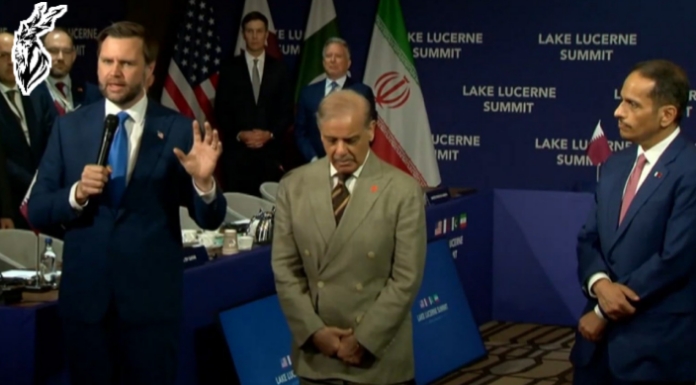

Bürgenstock, Switzerland: High-level negotiations between the United States and Iran concluded on Monday with what mediators Pakistan and Qatar described as “encouraging progress,” including agreement on a roadmap aimed at securing a comprehensive peace deal within the next 60 days.
The talks, held under the framework of the Islamabad Memorandum of Understanding (MoU), brought together senior delegations from the United States, Iran, Pakistan and Qatar in an effort to address months of regional tensions that have fueled instability across the Middle East and contributed to rising global energy prices.
In a joint statement issued by the foreign ministries of Pakistan and Qatar, mediators said the discussions at the Lake Lucerne Summit were conducted in a “positive and constructive atmosphere” and resulted in several key understandings designed to advance the peace process.
Among the most significant outcomes was the establishment of a High-Level Committee tasked with providing political oversight for ongoing negotiations. The committee will supervise a series of specialised working groups focusing on nuclear issues, sanctions relief, monitoring mechanisms and dispute resolution procedures aimed at ensuring implementation of the Islamabad MoU.
According to the statement, negotiators have agreed on a framework intended to pave the way for a final settlement within 60 days, while technical discussions will continue throughout the week at the Swiss resort.
The parties also agreed to establish a direct communication channel to prevent misunderstandings and reduce the risk of incidents that could threaten regional stability. The mechanism is expected to support efforts to maintain safe commercial navigation through the strategically vital Strait of Hormuz.
A major focus of the negotiations remains the conflict in Lebanon. Iran has repeatedly insisted that a sustainable ceasefire between Israel and Hezbollah is essential for broader diplomatic progress. Despite recent truce efforts, violence continues in southern Lebanon, where Israeli strikes reportedly killed 16 people over the weekend.
To address these concerns, negotiators approved the creation of a “de-confliction cell” involving the parties and Lebanon, with Pakistan and Qatar serving as facilitators. The mechanism is intended to oversee compliance with commitments related to ending military operations in Lebanon and preventing renewed escalation.
Iranian Foreign Minister Seyed Abbas Araghchi described the talks as a significant step forward, saying the negotiations had achieved “major progress” toward reducing tensions and strengthening regional stability.
In a post on social media platform X, Araghchi highlighted developments including sanctions-related discussions, access to frozen Iranian assets and plans for economic reconstruction and development initiatives. He also described the Lebanon de-confliction mechanism as an important early test of the agreement’s effectiveness.
The U.S. delegation was led by Vice President JD Vance, who held direct talks with Iranian Parliament Speaker Mohammad Bagher Qalibaf and Foreign Minister Araghchi. According to Iranian media, the meeting lasted approximately 80 minutes and was supplemented by separate consultations with Pakistani and Qatari mediators.
Pakistan was represented by Prime Minister Shehbaz Sharif and Chief of Defence Forces Field Marshal Syed Asim Munir, underscoring Islamabad’s central role in facilitating dialogue between Washington and Tehran.
During the negotiations, Prime Minister Sharif also spoke by telephone with Saudi Crown Prince Mohammed bin Salman, thanking Saudi Arabia for its support of ongoing peace efforts and emphasising the importance of diplomacy in resolving regional disputes.
The Islamabad Memorandum of Understanding, signed last week by the presidents of the United States and Iran, seeks to establish a framework for ending hostilities, reopening regional trade routes and reducing military tensions across several conflict zones.
Despite the positive developments, challenges remain. Tensions briefly resurfaced ahead of the talks when Iran accused Israel of violating ceasefire arrangements in Lebanon and raised concerns regarding shipping activity through the Strait of Hormuz. Meanwhile, U.S. President Donald Trump warned that Washington would respond forcefully if Iranian-backed groups continued military actions in the region.
Nevertheless, mediators expressed optimism that the progress achieved in Switzerland could provide momentum toward a broader and more durable regional settlement in the weeks ahead.