
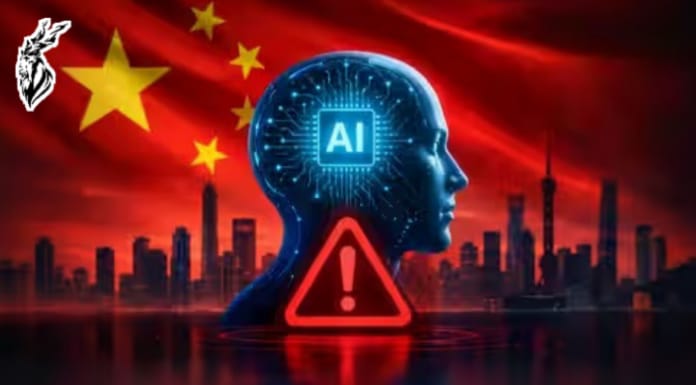

AI ‘warning shots’ are pushing Beijing to view artificial intelligence through the lens of national security risks, a shift from its earlier focus on immediate harms such as deepfakes and child safety. While researchers in the United States have long fretted over out-of-control superintelligence wiping out humanity, Chinese policymakers had until now concentrated on more everyday dangers. But the alarming hacking ability of top AI models is leading Beijing to see the threats in a new light, with the country’s spy agency chief warning this week that the technology could jeopardise national security.
The potential vulnerability of China’s mega-app WeChat was also revealed recently when a small team of programmers in California said it had used AI to build a cyberattack “worm” that, if unleashed, could easily compromise millions of WeChat accounts. That disclosure underscored how quickly theoretical risks can become concrete ones for a platform woven into daily life for hundreds of millions of users.
“There are more similarities than differences when it comes to AI safety issues” in China and the United States, said Kevin Xu, founder of US-based technology hedge fund Interconnected Capital. But unlike in America, these “don’t get litigated or go viral in public in China”, Xu told AFP. Nevertheless, the cybersecurity impact of AI agent bots acting without human oversight “would rank very high among the Chinese government’s biggest concerns”.
As the topic grabs global headlines, the pressure is on for President Xi Jinping and US counterpart Donald Trump to discuss tackling the AI threats to both countries at in-person talks on Thursday — despite their rivalry in the field. Both powers are “developing a more realistic and shared understanding of these risks, thereby heightening the sense of urgency” to work together, Sun Chenghao of Tsinghua University’s Centre for International Security and Strategy told AFP.
Cooperation on shared safety evaluations for AI models or alert systems when crises emerge might be undermined by the fierce competition, however. “We’re leading China in AI… and frankly I want to keep it that way,” Trump said when asked about calls from top US labs for a coordinated slowdown of their cutting-edge work. Meanwhile, Sun said, “China is concerned that ‘security’ may be” used as a pretext by Washington to constrain its technological rise, according to the source material.
The emerging dynamic leaves Beijing balancing two imperatives: guarding against AI-enabled cyber threats that could destabilise its digital economy and public trust, and resisting external pressure that it fears could be dressed up as safety cooperation. The spy agency chief’s warning signals that AI is no longer just a commercial or research priority for China, but a matter of state security.
For now, the conversation between the two powers remains fraught. Shared concerns about rogue AI agents, model safety and platform vulnerabilities create room for dialogue, yet the same rivalry that makes cooperation urgent also makes it fragile. How Xi and Trump navigate that tension could shape not only the trajectory of AI development but also the broader terms of their technological competition.
Source: Dawn News